BPC-157 in research: molecular mechanisms, protocols and the 2026 state of science

Why BPC-157 generates such scientific curiosity
BPC-157 (Body Protection Compound-157) is a fifteen-amino acid peptide that occupies an unusual position in the contemporary biomedical research landscape: abundantly studied in animal literature for thirty years, practically absent from human clinical studies, and yet one of the most discussed "research peptides" in 2026. This asymmetry deserves rigorous scientific reading rather than enthusiastic or dismissive reduction.
Preclinical teams' interest rests on three converging observations. First, BPC-157 derives from a naturally expressed human gastric protein and remains stable in gastric juice, opening hypotheses about an endogenous tissue signaling role. Second, multiple animal models have reported measurable effects on tissue regeneration, inflammatory response modulation and healing of structures usually difficult to repair such as tendons and ligaments. Third, its preclinical safety profile at reasonable doses appears favorable in the published literature, which encourages finer mechanistic exploration.
This guide articulates current scientific knowledge on BPC-157 from a strictly RUO (Research Use Only) perspective. It addresses researchers, molecular biology students and private laboratories wishing to design relevant experimental protocols on cellular or animal models, based on solid understanding of the molecule rather than amalgams circulating online.
Origin: from gastric juice to synthesized sequence
BPC-157 is a fifteen-amino acid partial sequence (GEPPPGKPADDAGLV) isolated by University of Zagreb teams in the 1990s. The original sequence derives from a larger protein called Body Protection Compound (BPC), identified in human gastric juice as a factor conferring unusual resistance to experimental ulcerogenic attacks. The choice of fragment 157 corresponds to the region that, in truncation studies, retains the majority of biological activity measured in vivo in induced gastrointestinal lesion models.
This gastric origin is important for two reasons. First, it explains BPC-157's remarkable stability under acidic conditions: its structure was selected by evolution to function in the hostile stomach environment (pH between 1 and 3). Pharmacokinetic studies confirmed that BPC-157 retains its structural integrity after prolonged exposure to gastric hydrochloric acid, a rare property among classical therapeutic peptides. This gastric stability fed the hypothesis of oral bioavailability, a hypothesis nevertheless difficult to rigorously validate because animal studies predominantly use intraperitoneal or subcutaneous routes.
Next, the natural origin of the sequence motivated researchers to explore an endogenous physiological role: BPC-157 would be a constituent fragment of the gastric protection system, released in response to mucosal aggressions to initiate local repair. This hypothesis remains debated, because reliable detection of the endogenous peptide in vivo faces its low abundance and the analytical difficulty of distinguishing the active fragment from its precursors.
Molecular structure and biochemical properties
The complete BPC-157 sequence is Gly-Glu-Pro-Pro-Pro-Gly-Lys-Pro-Ala-Asp-Asp-Ala-Gly-Leu-Val, with a molecular mass of 1419 Da. Four structural characteristics deserve research team attention.
Proline richness: BPC-157 contains four consecutive proline residues in positions 3-6, an unusual configuration that rigidifies the peptide backbone and confers a constrained polyproline II-like conformation. This structural rigidity probably contributes to its resistance to intestinal and circulating proteases, because prolines are known to slow enzymatic hydrolysis of adjacent peptide bonds.
Absence of disulfide bridges: unlike many therapeutic peptides (somatostatin, octreotide, insulin), BPC-157 contains no cysteine and is therefore not stabilized by disulfide bridges. This structural simplicity facilitates its chemical synthesis by SPPS (Solid-Phase Peptide Synthesis) in standard Fmoc chemistry, with high yields and without oxidative folding complications.
Terminal acidic residues: the two aspartates (Asp-Asp) in positions 10-11 create a negatively charged region in physiological medium (pH 7.4), which influences its aqueous solubility and potentially its interactions with plasma or membrane proteins. pI calculations place BPC-157 around 4, confirming its acidic nature at physiological pH.
No major post-translational modification: unlike acylated semaglutide or octanoylated ghrelin, native BPC-157 is not modified by lipid chains, phosphorylations or complex glycosylations. It is therefore relatively simple to produce synthetically and characterize analytically.
Molecular mechanisms studied: what animal literature suggests
BPC-157's mechanism of action remains incomplete despite thirty years of research. Unlike peptides with well-characterized receptors (GLP-1R for semaglutide, melanocortins for PT-141), no specific BPC-157 receptor has been identified to date. Mechanistic studies rather converge on a bundle of modulatory effects on several interconnected biological pathways.
Nitric oxide (NO) axis: several animal studies reported that the protective and regenerative effects of BPC-157 are attenuated by co-administration of NO synthase inhibitors (L-NAME, L-NNA). This observation suggests that BPC-157 modulates endothelial NO production, a central molecule of vasodilation, angiogenesis and tissue healing. The exact upstream mechanism is not established: direct eNOS activation, modulation of available L-arginine, or interaction with regulatory transcription factors.
Angiogenesis: ex vivo studies on rat aortic rings and in vitro on endothelial cells reported stimulation of neovessel formation in the presence of BPC-157. This angiogenic activity could explain part of the observed effects on repair of poorly vascularized tissues such as tendons, ligaments and cartilages. VEGF (vascular endothelial growth factor) induction was reported in certain models, without the transcriptional mechanism being fully dissected.
Inflammatory modulation: animal models of experimental colitis (TNBS, DSS), toxic hepatitis and joint damage documented reduction of pro-inflammatory cytokines (TNF-α, IL-6, IL-1β) and improvement of histological lesion scores. This modulation seems to exert on several immune cellular compartments, including tissue macrophages whose polarization toward the anti-inflammatory M2 phenotype is favored.
Interaction with dopamine-serotonin axis: animal behavioral studies suggested effects on neurological pathways, notably protection against lesions induced by dopaminergic and serotoninergic neurotoxins. These still preliminary observations open mechanistic hypotheses about possible central modulation complementary to peripheral effects.
Cell signaling pathways: in vitro molecular analyses described modulation of FAK-paxillin (cell adhesion), VEGFR2 (angiogenesis) and possibly Akt-mTOR (cell growth) pathways. These results remain heterogeneous depending on cellular models and concentrations used, which probably reflects the peptide's pleiotropic complexity rather than a single linear mechanism.
Emblematic animal studies
BPC-157 literature is dominated by publications from a limited number of research teams, primarily Croatian, with some Scandinavian and Asian contributions. This geographic concentration represents an important methodological limitation that researchers must be aware of when critically analyzing results.
Gastrointestinal models: one of the most documented corpuses concerns induced ulcerous lesions (ethanol, indomethacin, stress) in rats. Studies converge toward significant reduction of ulcer area and accelerated reepithelialization after systemic BPC-157 administration. The same teams extended observations to colitis, induced hepatitis and experimental digestive fistulas.
Tendons and ligaments: several studies on complete rat Achilles tendon sections reported improved biomechanical properties (tensile strength, elastic modulus) after subcutaneous BPC-157 treatment. Histological analyses described increased fibroblast density, improved collagen alignment and local neovascularization. These results fed massive interest in sports communities despite the complete absence of controlled human clinical studies.
Cartilage and bone: rat cartilage lesion and fracture models documented accelerated repair after BPC-157. Invoked mechanisms include modulation of osteoblastic and osteoclastic activity as well as stimulation of mesenchymal stem cell differentiation toward the chondrogenic lineage.
Central nervous system: studies on ischemic brain lesion models and pharmacological neurotoxicity (MPTP, haloperidol) reported neuroprotective effects. This trail represents an active preclinical research domain, although central BPC-157 mechanisms are particularly poorly characterized due to the unresolved question of its penetration across the blood-brain barrier.
Methodological controversies to know
An honest analysis of BPC-157 literature must recognize several important methodological limitations that temper enthusiasm and orient new protocol design.
Publication concentration: a large majority of positive studies come from a restricted research group, raising a classic question of independent reproducibility. Modern medical science ideally requires that major effects be confirmed by geographically and institutionally distinct teams, before being considered robust.
Dose and route heterogeneity: animal studies use very variable doses (from 10 nanograms to 10 micrograms per kg) and different routes (intraperitoneal, subcutaneous, intravenous, oral), which complicates comparisons between protocols and establishing a clear dose-response relationship.
Absence of human clinical studies: despite thirty years of animal research, no large randomized controlled human clinical study has been published on BPC-157. This absence is remarkable for such a discussed compound and is explained by several factors: patent fallen into public domain without major pharmaceutical commercial interest, ambiguous regulatory status, difficulties in financing clinical trials for a non-patented peptide.
Unknown human pharmacokinetics: pharmacokinetic parameters in humans (plasma half-life, actual oral bioavailability, tissue distribution, metabolism) are not established by controlled studies. Animal extrapolations remain indicative but cannot replace direct human data.
Variable quality of commercial products: BPC-157 offered on the market presents highly heterogeneous quality, ranging from highly purified batches with rigorous analytical CoA to doubtful products without traceability. This variability directly affects experimental reproducibility, which reinforces the importance of sourcing from reliable suppliers practicing documented quality control.
Quality research BPC-157 selection criteria
For a research team preparing a protocol involving BPC-157, the quality of the peptide used directly conditions the scientific validity of results. Seven criteria deserve systematic verification before order.
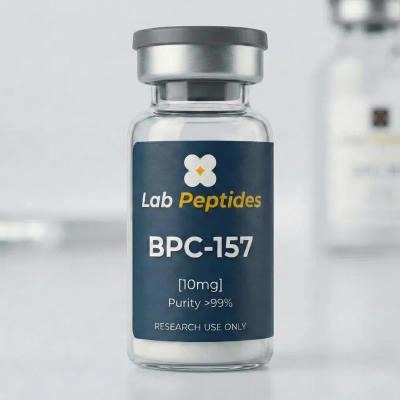
Complete Certificate of Analysis (CoA): the supplier must provide for each batch a CoA indicating the sequence, HPLC purity (ideally above 98%), molecular mass confirmed by mass spectrometry (theoretical 1419.55 Da), residual water content after lyophilization, and manufacturing/expiration date.
Visible HPLC chromatogram: a good supplier attaches the raw HPLC chromatogram allowing visualization of the main peak, minor impurities and their relative retention time. The absence of this document leaves doubt about the reality of the analysis.
Mass spectrum: the MS spectrum confirms exact molecular identity. For BPC-157, a peak at m/z 1420.5 in [M+H]+ mode or compatible multiply charged adducts is expected. An unexplained shift indicates a major impurity or a different product.
Synthesizer traceability: the synthesis provenance (laboratory, country, possible certifications such as ISO 9001 or cGMP) provides indications on upstream quality control rigor.
Adapted packaging: lyophilized BPC-157 should be conditioned in sterile vial sealed under inert gas or partial vacuum, protected from light, accompanied by clear storage instructions (-20°C ideally, avoiding freeze-thaw cycles).
Documented stability: a serious supplier indicates the stability of the peptide in lyophilized form (typically 2 to 3 years at -20°C) and reconstituted in solution (typically a few weeks at 4°C in bacteriostatic water).
Transparency on RUO status: "Research Use Only — Not for human consumption" labeling must be explicit and appear on the vial, the box, the invoice and documentation. A supplier who suggests or implicitly tolerates human use represents a major alarm signal, both for product quality and regulatory compliance.
Reconstitution and experimental preparation
Lyophilized BPC-157 must be reconstituted correctly to guarantee stability and precise concentration used in experimental protocols. The following steps summarize good laboratory practices.
Equipment and consumables: sterile 1 mL syringes with fine needle (27G to 29G), sterile bacteriostatic water containing 0.9% benzyl alcohol as preservative, sterile recovery vials, needle cap for clean sampling, vial support, nitrile gloves, clean disinfected surface.
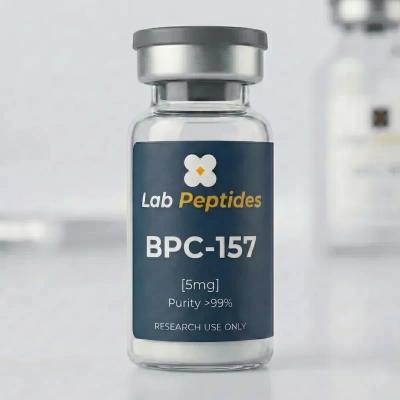
Reconstitution volume calculation: for a 5 mg BPC-157 vial, adding 2 mL of bacteriostatic water gives a final concentration of 2.5 mg/mL, or 250 µg per 100 µL. Adapt volume according to the final concentration desired for planned experiments. Note that most animal studies use doses between 10 ng/kg and 10 µg/kg, which corresponds to very small volumes in murine practice and imposes intermediate dilutions.
Reconstitution procedure: slowly draw the calculated volume of bacteriostatic water. Let the water flow along the inner vial wall without direct impact on the lyophilisate cake. Avoid aggressive vortexing which can denature the peptide structure. Gently roll the vial between fingers for 30 seconds until complete dissolution. The final solution must be perfectly transparent, without visible particles or turbidity.
Labeling and storage: label the reconstituted vial with the reconstitution date, final concentration, batch number. Store immediately at 4°C for rapid use (ideally within 30 days) or at -20°C for prolonged storage. Multiple freeze-thaws progressively degrade the peptide: prepare single-use aliquots when possible.
Optional internal quality control: laboratories with HPLC equipment can re-validate the reconstituted peptide before experimental use to detect possible degradations. This step becomes critical for long protocols or when obtained results deviate from published expectations.
Experimental design: pitfalls to avoid
BPC-157 protocol design must anticipate several recurring pitfalls observed in the literature, to produce robust and publishable data.
Appropriate vehicle controls: bacteriostatic water itself has minor bioactivity (benzyl alcohol exerts local anesthetic effects). The control group must receive exactly the same vehicle in the same volume by the same route, otherwise observed differences can reflect a vehicle artifact rather than a real peptide effect.
Experimental blinding: treatment preparation and evaluation of assessment criteria (histological scores, functional measures) must be performed blinded with respect to group assignment. This rigor is particularly important for the subtle pleiotropic effects documented with BPC-157.
Sufficient sample size: a priori statistical power calculations guide determination of number of animals per group. Underpowered studies produce non-reproducible results and upward-biased effect estimates (statistical winner's curse).
Biological and technical replicates: clearly distinguish in planning and reporting biological replicates (independent animals) from technical replicates (repeated measurements on the same sample). This fundamental methodological distinction remains neglected in a significant fraction of published literature.
Validation by at least two independent measures: a robust biological effect manifests on several independent indicators (histology + biomechanics + molecular markers, for example). Studies presenting only one type of measure are epistemologically fragile and difficult to reproduce.
BPC-157 research FAQ
Is BPC-157 an authorized compound for human use?
No. BPC-157 is not approved by any regulatory agency (EMA, FDA, ANSM) for human therapeutic use. It is marketed and used exclusively within the strict framework of preclinical in vitro or animal research, with the mandatory mention "RUO — Research Use Only — Not for human consumption". Its use on humans outside authorized clinical trials is illegal in most jurisdictions.
What is the difference between BPC-157 and TB-500?
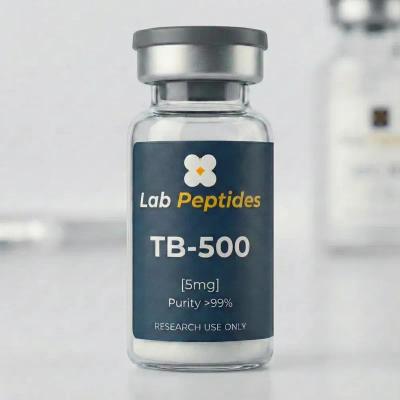
Both peptides are frequently cited together in regenerative research but differ fundamentally. BPC-157 derives from gastric juice, is 15 amino acids long, and modulates complex angiogenic and inflammatory pathways without an identified receptor. TB-500 (thymosin beta-4) is a 43-amino acid peptide that sequesters monomeric G-actin and regulates cytoskeletal dynamics. Their mechanisms are distinct even if observed biological effects partially overlap.
Why has no human clinical study been published?
Several factors combine: absence of active patent (thus little pharmaceutical incentive to finance trials), ambiguous regulatory status in most countries, high cost of a phase I to III clinical trial (several million to tens of million euros), difficulty in defining a precise indication acceptable to a regulatory authority. Until an actor sees clear return on investment, human trials will not be launched.
Can animal doses be extrapolated to cellular experiments?
Direct extrapolation of animal dose to cellular concentration (in vitro) is delicate. In vitro studies typically use concentrations between 1 nM and 10 µM depending on cell type and measured marker. Animal studies use allometric doses between 10 ng/kg and 10 µg/kg. No universal rule directly converts these two scales; each experimental protocol must adjust via preliminary pilot ranges.
How to identify a dubious BPC-157?
Alarm signals: absence of CoA or photocopied CoA without raw HPLC chromatogram, abnormally low price, packaging without visible RUO mention, absent or fanciful storage instructions, product description suggesting precise human effects, supplier without professional website or verifiable laboratory contact. Always prefer an established actor with complete analytical traceability and transparency on synthesis origin.
Perspective: what can be expected from BPC-157 in research by 2030?
Three axes of progress reasonably structure BPC-157 research in the coming years. First, the eventual identification of one or several target receptors thanks to modern chemo-genomics techniques (photo-affinity, high-throughput interactome, CRISPR screening). Second, the launch of phase I human clinical studies by academic centers or non-commercial consortia, driven by scientific interest rather than patent considerations. Third, a systematic characterization of human pharmacokinetics and oral bioavailability, a key question for any clinical development prospect.
Awaiting these advances, BPC-157 remains an interesting pharmacological tool for preclinical research, provided it is used with methodological rigor, scientific transparency and lucidity about current knowledge limits. French laboratories relying on serious suppliers like lab-peptides-france.com can participate in consolidating the mechanistic understanding of this atypical peptide, with robust protocols that will withstand critical examination by the international scientific community.
Comparison with other regenerative research peptides
Positioning BPC-157 within the broader landscape of regenerative research peptides helps laboratories choose the most relevant tool for a given scientific question. Four peptides frequently appear together in preclinical regenerative studies: BPC-157, thymosin beta-4 (TB-500), GHK-Cu (copper tripeptide) and growth hormone releasing peptides (GHRPs). Each targets distinct molecular mechanisms and suits different experimental contexts.
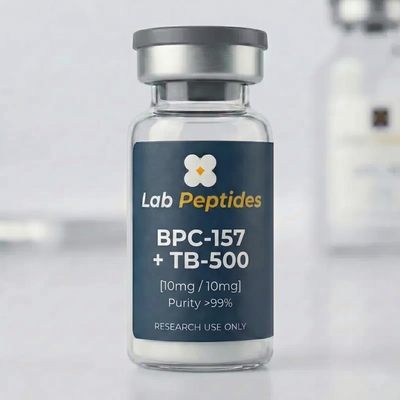
BPC-157 versus TB-500: the most common comparison in regenerative literature. BPC-157 appears to act upstream through vascular and inflammatory pathway modulation (nitric oxide, VEGF, cytokine balance), while TB-500 directly regulates cytoskeletal dynamics through G-actin sequestration. Several animal studies have combined both peptides in parallel arms to dissect their relative contributions to tendon or skin healing. Interpretations must account for the absence of any direct mechanistic crosstalk documented between these two molecules; observed additive effects likely reflect convergence on different limiting factors of tissue repair rather than pathway synergy.
BPC-157 versus GHK-Cu: GHK-Cu is a short copper-binding tripeptide with well-characterized effects on extracellular matrix remodeling, fibroblast proliferation and antioxidant defense. Its mechanism differs radically from BPC-157: GHK-Cu acts largely through chelation and redox modulation, delivering copper as a cofactor for lysyl oxidase and superoxide dismutase. Researchers investigating matrix biology often pair GHK-Cu studies with BPC-157 arms to separate vascular modulation from matrix remodeling contributions.
BPC-157 versus GHRPs and CJC-1295: growth hormone secretagogues act via pituitary GH release, which systemically elevates IGF-1 and downstream anabolic signaling. This is a fundamentally indirect regenerative mechanism compared to BPC-157's local tissue actions. Laboratories investigating systemic versus local regenerative effects sometimes use a GHRP as a systemic arm and BPC-157 as a local arm to dissect compartmentalized contributions.
Analytical quality control: what a rigorous laboratory verifies in-house
Beyond supplier CoA review, laboratories with analytical capability increasingly perform in-house verification of received BPC-157 batches before committing to long experimental protocols. Three verification layers structure a rigorous incoming quality control workflow.
Layer 1 — Identity confirmation by mass spectrometry: a simple MALDI-TOF or ESI-MS measurement on a reconstituted aliquot confirms the expected molecular mass (1419.55 Da theoretical, observed [M+H]+ at m/z 1420.5 or related adducts). Mass deviation beyond 1 Da indicates a different peptide, a major impurity, or a sample handling error. This step takes minutes and catches the most common batch mix-ups before wasted animal experiments.
Layer 2 — Purity verification by analytical HPLC: a standard reverse-phase HPLC run on a C18 column with acetonitrile/water/TFA gradient reveals the main peak and minor impurities. Research-grade BPC-157 should show a dominant peak exceeding 98% of total peak area, with impurities each below 0.5%. Shoulders on the main peak or unexpected peaks at 30-60% of the main peak retention time suggest truncated sequences (deletion products from failed couplings) that often retain partial activity and confound pharmacological interpretation.
Layer 3 — Functional verification in a reference bioassay: the most demanding quality control layer involves confirming biological activity in a simple reference assay before moving to expensive protocols. For BPC-157, cell migration assays (scratch wound closure on fibroblasts) or nitric oxide production in endothelial cells provide quick functional checks. A batch passing identity and purity but failing bioactivity points to an unrecognized structural degradation (oxidation, deamidation) requiring deeper investigation or batch rejection.
Documentation and traceability for reproducible publications
Modern biomedical journals increasingly require detailed reporting of research peptide sourcing and handling to support reproducibility. A rigorous BPC-157 study documents the following elements in the methods section: supplier name and batch number, certificate of analysis reference, reconstitution vehicle and date, storage conditions between reconstitution and administration, aliquot number of freeze-thaw cycles if any, and verification procedures performed in-house if applicable. Omitting these details prevents other laboratories from reproducing results with equivalent material and contributes to the reproducibility crisis affecting regenerative peptide research specifically.
For laboratories building long-term BPC-157 research programs on lab-peptides-france.com, maintaining a centralized batch tracking system linking each experimental notebook entry to a specific vial lot, reconstitution date and CoA reference creates the documentation backbone required for future high-impact publications. This discipline also supports internal troubleshooting when unexpected experimental variability appears: batch comparison becomes immediate rather than requiring retrospective archaeology across months of laboratory records.