SS-31 (elamipretide): the peptide that targets the mitochondrion directly
A peptide that does not work at the surface
The vast majority of research peptides share one logic: they bind a receptor on a cell's outer membrane and trigger a signaling cascade. SS-31, also known as elamipretide (and by the code MTP-131), breaks from this pattern. It does not seek a surface receptor. It crosses membranes and concentrates where energy is made: in the mitochondrion.
This targeting difference is what makes the molecule interesting for research. SS-31 belongs to the Szeto-Schiller peptide family, a series of tetrapeptides designed to selectively target the inner mitochondrial membrane. Its structure alternating aromatic and basic amino acids gives it a particular affinity for one specific lipid of that membrane: cardiolipin.
Cardiolipin, the anchoring target
Cardiolipin is a phospholipid almost exclusively present in the inner mitochondrial membrane, where it plays a structural role in organizing the respiratory chain. SS-31 associates with it without blocking its activity: it does not destroy the target, it anchors to it.
This anchoring mechanism is the subject of research. By binding cardiolipin, the peptide concentrates in a very precise compartment, reaching high local concentrations where a freely diffusing molecule would be diluted across the whole cell volume. For a laboratory, this is a model for studying subcellular targeting: how to bring a molecule not into a cell, but into a specific organelle of that cell.
Why the mitochondrion draws interest
The mitochondrion is the site of oxidative phosphorylation, the pathway producing most cellular ATP. It is also a major source of reactive oxygen species, unavoidable byproducts of respiration. The balance between energy production and mitochondrial oxidative stress sits at the heart of many fundamental research axes, from cellular aging to the bioenergetics of high-demand tissues.
It is in this context that mitochondria-targeting peptides are studied. SS-31 and MOTS-c (a peptide encoded by the mitochondrial genome itself) represent two distinct approaches to the same question: how to modulate mitochondrial function in a targeted way. The first acts by membrane anchoring, the second as a signal peptide.
What the research format brings
SS-31 is available for research in two formats: 10mg and 50mg. The 50mg format suits higher-volume protocols or extended dose-response studies, where handling more concentrated units reduces the number of reconstitutions.
Like any lyophilized peptide, it requires reconstitution in bacteriostatic water and cold storage once in solution. Its structural stability — only four amino acids — makes it a robust molecule to handle, less prone to degradation than long peptide chains.
SS-31 in the mitochondrial toolbox
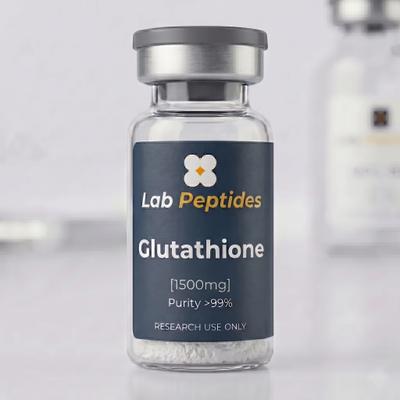
No single molecule sums up mitochondrial research. SS-31 holds a precise place: that of the cardiolipin anchoring peptide, a tool to study what happens when a molecule is concentrated on the inner membrane rather than left to diffuse. Alongside it, MOTS-c explores the mitochondrial signal peptide route, and cofactors like glutathione document the redox dimension.
For a laboratory building a protocol around bioenergetics, having these different tools allows crossing approaches: membrane anchoring, signaling, redox status. It is this complementarity, more than any isolated molecule, that advances understanding.
Product intended exclusively for laboratory research. Not for human or animal consumption.