Cognitive peptides in research: Semax, Selank, Dihexa and the new generation of peptide nootropics
Cognition, the new frontier of research peptide therapy
For decades, neuropeptide research focused on the major endocrine axes (hypothalamic-pituitary, opioids, oxytocin). Since the 2000s, a parallel field has consolidated around short peptides with neuromodulatory purposes, often derived from hormone fragments or naturally brain-active endogenous molecules. This includes Semax (ACTH fragment), Selank (tuftsin analogue), Dihexa (angiotensin IV derivative), but also Cerebrolysin, Noopept, P21 and a galaxy of Russian and Japanese derivatives.
This dossier synthesises available preclinical data on these compounds and sets the methodological framework for rigorous research protocols. Absolute reminder: the peptides sold by Lab Peptides France are strictly intended for in vitro research and laboratory animal experimentation (RUO, Research Use Only). No human use, no nootropic promise, no human dosing advice is provided or covered. Cognitive research is a domain where RUO rigour is particularly critical due to the dangerous extrapolations made by non-scientific communities.
Semax: from ACTH4-10 to the neurotrophic tool
Origin and structure
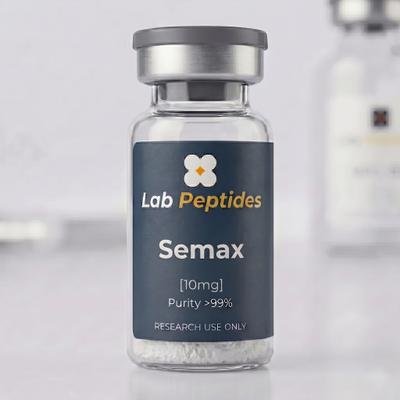
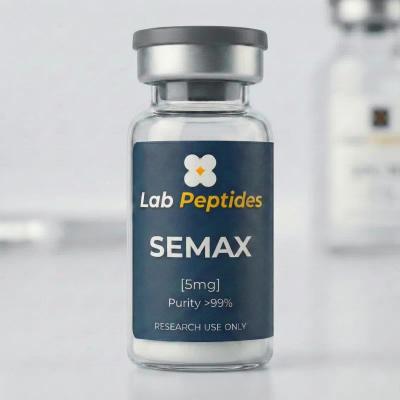
Semax is a synthetic heptapeptide developed in the 1980s at the Institute of Molecular Biology in Moscow. Its sequence is Met-Glu-His-Phe-Pro-Gly-Pro (MEHFPGP), derived from the 4-10 fragment of human ACTH to which a stabilising Pro-Gly-Pro C-terminal tripeptide is added. Molecular mass: 813.9 Da. The Pro-Gly-Pro (PGP) addition is a stabilising motif that protects against enzymatic degradation and increases half-life.
Documented mechanisms of action
Preclinical studies (mostly Russian, to be reproduced in international protocols) report several mechanistic targets:
- BDNF increase (Brain-Derived Neurotrophic Factor) in the hippocampus and frontal cortex, measured by ELISA and Western blot 24-72 h post-administration
- Monoaminergic system modulation: cortical dopamine increase, serotonergic modulation
- Activation of the melanocortin pathway via MC4R receptors (residue shared with ACTH)
- Anti-oxidant and anti-apoptotic effect in cerebral ischaemia models (MCAO, middle cerebral artery occlusion)
Experimental paradigms
The most reported rodent models are the Morris water maze (spatial memory), novel object recognition (recognition memory), passive avoidance (aversive learning). Reported preclinical doses (for documentary purposes only) vary by route: intranasal (high bioavailability, direct BBB crossing via olfactory and trigeminal pathways), intraperitoneal, subcutaneous. Intranasal administration is particularly studied for its ability to bypass the blood-brain barrier via retrograde axonal transport.
Selank: immunomodulatory tuftsin and anxiolytic
Origin and structure
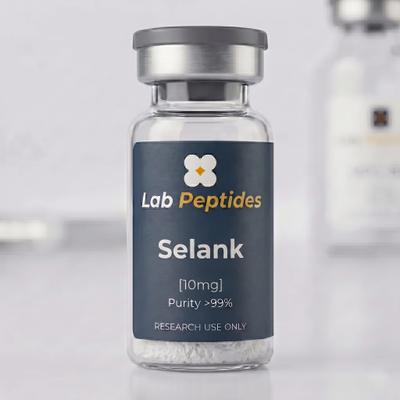
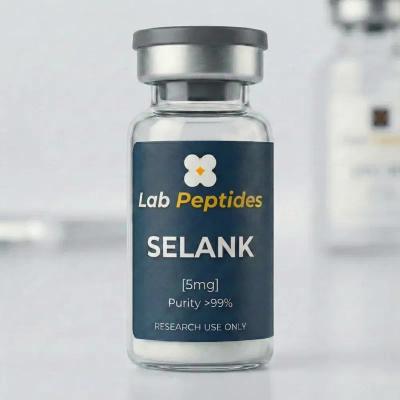
Selank is a heptapeptide derived from tuftsin (Thr-Lys-Pro-Arg), an endogenous immunomodulatory fragment from IgG. Its complete sequence is Thr-Lys-Pro-Arg-Pro-Gly-Pro (TKPRPGP), with the same Pro-Gly-Pro stabilising motif as Semax. Molecular mass: 751.9 Da.
Mechanisms of action
Preclinical studies document:
- Anxiolytic effect without sedation in classical tests (elevated plus maze, open field, light-dark box)
- GABAergic system modulation: allosteric potentiation of GABA-A observed ex vivo
- Enkephalin increase (endogenous opioid peptide) and serotonergic modulation
- Immunomodulatory effects inherited from tuftsin: macrophage activation, T-helper modulation
Behavioural models
Anxiolysis is measured via time spent in open arms of the elevated plus maze (EPM), visit ratio of central zones of open field, and exit latency in light-dark box. Absence of sedation is verified by locomotor activity (distance travelled) and rotarod tests for motor coordination.
Dihexa: the neurotrophic giant from angiotensin IV
Origin and structure
Dihexa (N-hexanoic-Tyr-Ile-(6) amino-hexanoic-amide, also called PNB-0408) is a modified analogue of angiotensin IV (Ang IV: Val-Tyr-Ile-His-Pro-Phe), developed in Joseph Harding's laboratory (Washington State University) from 2010-2012. Its design illustrates a radical peptidomimetic: only two amino acid residues (Tyr-Ile) are preserved from the native peptide, flanked by non-peptide acyl chains to cross biological barriers.
Mechanism: hepatocyte growth factor (HGF) / c-Met
Dihexa activates the HGF / c-Met pathway in neurons, inducing synaptogenesis (formation of new synapses) and dendritogenesis. Harding's original studies report a dramatic increase in dendritic density in the hippocampus and memory restoration in rodent models of cholinergic lesion (scopolamine, 192-IgG-saporin).
Limitations and controversies
Dihexa literature is dominated by a small number of laboratories. Independent replications remain limited. Complete pharmacokinetic studies and long-term evaluations are rare. For a laboratory wishing to use Dihexa, the recommended approach is to first reproduce a published paradigm (Morris water maze + lesion) before extrapolating to new applications.
Neurotrophic pathways: BDNF, NGF, HGF and molecular logic
Most modern cognitive peptides converge on three main trophic pathways:
BDNF / TrkB
BDNF is the most studied trophic molecule in adult neuroplasticity. Its TrkB receptor (tyrosine kinase B) activates PI3K/Akt, Ras/MAPK and PLC-γ. BDNF transcription is under CREB control, itself activated by cAMP and Ca²⁺. Semax, Noopept and several other compounds are reported as increasing hippocampal BDNF.
NGF / TrkA
NGF (Nerve Growth Factor) is critical for basal forebrain cholinergic neurons involved in memory. NGF fragments (HBNF / cycloprolylglycine) are studied as endogenous inducers. Semax also shows NGF-like activity in some studies.
HGF / c-Met
Specifically targeted by Dihexa, this pathway induces synaptogenesis through a mechanism distinct from BDNF/NGF pathways. Scientific interest lies in potential complementarity: activating HGF + BDNF could theoretically produce synergistic synaptogenic effect, an active subject of preclinical research.
Standardised behavioural models in rodent cognition
Spatial memory
- Morris water maze: submerged platform in opaque pool, localisation latency D1-D5, probe test at D6 (platform removal). Measures acquisition + retention.
- Barnes maze: dry variant, circular platform with holes one containing a refuge. Measures allocentric memory.
- Radial arm maze: 8-arm maze, measures working memory (repeated entries in visited arms) vs reference memory (entries in non-rewarded arms).
Recognition memory
- Novel Object Recognition (NOR): familiarisation phase with 2 identical objects, test phase with a new object. Discrimination index D2 = (Tnew - Tfamiliar) / (Tnew + Tfamiliar).
- Object Location: an object moved between phases, tests hippocampus-dependent spatial memory.
Aversive learning
- Passive avoidance: light/dark chamber with electric shock. Measures entry latency at 24 h and 7 d.
- Fear conditioning: contextual (hippocampus) or tone-dependent (amygdala). Measures freezing %.
Attention and executive functions
- 5-CSRTT (5-choice serial reaction time task): operant task measuring sustained attention and impulsivity.
- Attentional set-shifting: cognitive flexibility, rodent equivalent of Wisconsin Card Sorting.
Analytical quality control of cognitive peptides
Short cognitive peptides (6-8 residues) impose specific analytical constraints:
- MS identity: ESI-LRMS is sufficient for these short sequences. Verify monoisotopic mass and detect oxidation peaks (Met +16 Da for Semax) or truncation.
- HPLC purity: C18 column with acetonitrile/TFA gradient. Target ≥ 98%. Short peptides often have a cleaner impurity profile than long sequences.
- Net content assay: AAA or UV-HPLC against reference.
- Residual acetate: particularly relevant for peptides synthesised by SPPS (Fmoc).
- Stability: PGP-stabilised peptides (Semax, Selank) resist degradation better than their native precursors. HPLC control 12 months post-synthesis remains recommended.
Reconstitution and routes of administration in research
For cognitive peptides, the choice of administration route is critical given the blood-brain barrier (BBB):
Intranasal route
Preferred in rodent research for Semax and Selank. Olfactory-trigeminal transport allows direct cerebral penetration without complete systemic passage. Typical reconstitution: sterile saline solution, instillation volume 5-20 µL per nostril under light anaesthesia. Rapid absorption (Tmax 10-30 min in CSF).
Subcutaneous / intraperitoneal route
Used for systemic studies. BBB penetration remains limited for unmodified peptides; Dihexa is an exception thanks to its hexanoic acyl chains.
Intracerebroventricular (ICV) route
Reserved for pointed mechanistic studies. Stereotaxic cannulation, 1-5 µL injection into the lateral ventricle. Allows confirmation that an effect is centrally mediated rather than peripheral.
Research cognitive peptides FAQ
Why the Pro-Gly-Pro motif?
PGP is a stabilising motif derived from biological observation: it resists most endopeptidases and aminopeptidases thanks to rigid prolines (pyrrolidine cycle). The Khavinson and Ashmarin groups systematised it on Russian bioactive peptides. Half-life multiplied by 5-20× depending on parent peptide.
Is Dihexa a peptide in the strict sense?
Technically it is a peptidomimetic: its extremities are non-peptide hexanoic chains. It is intermediate between peptide chemistry and small-molecule medicinal chemistry. This has implications for synthesis, stability and analytical control.
What barrier for the BBB?
The BBB drastically limits native peptides. Crossing strategies are: (1) bypassing intranasal route, (2) lipid modifications (Dihexa), (3) active transporters (insulin, transferrin), (4) vehicles like nanoparticles or exosomes. For a research project, the intranasal route is the simplest approach to implement.
Should BDNF be measured?
Yes, if the BDNF pathway is in the mechanistic hypothesis. BDNF ELISA on hippocampal homogenate, 24-72 h post-administration. Caution: plasma BDNF is poorly correlated with central BDNF; tissue measurement is the reference.
What minimal statistical design?
n ≥ 8 per group for behavioural tests, mandatory vehicle control, blinded randomisation, ANOVA analysis with post-hoc correction. Replication studies should integrate a positive control (e.g., memantine, donepezil) to validate the paradigm.
Conclusion
Cognitive peptides constitute a heterogeneous but scientifically fertile family. Semax and Selank offer an extensive preclinical corpus (mainly Russian) with well-documented BDNF and anxiolytic targets. Dihexa opens an original HGF/c-Met pathway, despite the rarity of independent replications. The three compounds, in a rigorous research approach, require: strict analytical control (MS + HPLC ≥ 98%), adapted administration route (intranasal for BBB crossing), standardised behavioural model with positive control, and exhaustive documentation for publication. Final RUO reminder: no human use, no clinical extrapolation, no nootropic promise. These peptides are research tools — and must remain so.
History and lineage of Russian cognitive peptides
The Russian neuropeptide school, founded by Nikolai Bechtereva and systematised by Ivan Ashmarin in the 1970s-1990s, rests on an original doctrine: each major endogenous neuropeptide carries within it short bioactive fragments capable of activating receptor subsets more selectively than the parent sequence. This hypothesis gave birth to an entire family of short regulatory peptides (Semax, Selank, Cortexin, Noopept, Epitalon, Cerluten and dozens of others) whose synthesis is documented in Russian pharmacological literature.
Semax, for example, emerged from the observation that ACTH(4-10) retains neurotrophic activity without the corticotropic activity of ACTH(1-39). PGP addition, a motif inspired by the organism itself (collagen, elastin), enabled a shift from minutes of half-life to several hours. This "fragment + stabiliser" method is a Russian methodological signature, widely used subsequently by the Khavinson, Myasoedov groups, and more recently by Chinese and Indian teams.
For an international laboratory starting a programme on these peptides, understanding this lineage is valuable: much reported data is available only in Russian (journals Biologicheskie Membrany, Eksperimental'naya i Klinicheskaya Farmakologiya). Modern English references (Ashmarin 2010, Levitskaya 2004, Myasoedov 2017) provide bibliographic entry points to systematically deepen before designing a protocol, to avoid reinventing results already published 30 years ago in a less accessible language.
Peptidomimetics and rational design: beyond Dihexa
Dihexa's design opened a field: ultra-short fragment peptidomimetics. By preserving only a Tyr-Ile dipeptide (from angiotensin IV) flanked by hexanoic chains, Harding's laboratory achieved three simultaneous objectives: BBB penetration, stability against aminopeptidases, and oral bioavailability. This approach inspired other programmes:
- N-hexanoic-Tyr-D-Arg: enkephalin-derived, protease-resistant, studied for pain
- N-methyl-Aib inclusions: N-methyl substitutions increase membrane permeability at the cost of partial loss of receptor affinity
- Beta-peptides and D-amino acids: substitution of natural chiral residues by their D enantiomers, making the peptide invisible to endogenous proteases while (sometimes) preserving function
- Stapled peptides: hydrocarbon cyclisation, popularised by Verdine (Harvard), stabilises alpha helices and improves cellular penetration
These strategies progressively shift the peptide / small molecule frontier. A researcher in 2026 must choose: work on native peptides (ease of SPPS synthesis, abundant literature) or optimised mimetics (better pharmacokinetics, but complex synthesis, less literature). The choice directly influences project feasibility and publication horizon.
Transgenic murine models for cognition
Beyond chemical lesion models (scopolamine, 192-IgG-saporin), cognitive research has an arsenal of genetically modified strains that reproduce specific cognitive phenotypes:
Alzheimer models
- 3xTg-AD (LaFerla): triple transgenic APP Swedish, PS1 M146V, tau P301L. Amyloid + tau pathology, spatial memory deficits from 6 months.
- 5xFAD: five familial APP + PS1 mutations, amyloid aggregates from 2 months, memory deficits from 4-6 months. Fast-evolving model.
- APP/PS1 (APP Swedish + PS1 deltaE9): historical model, useful for longitudinal studies (12-18 months).
- Tg4510: tauopathy alone, useful for dissociating amyloid vs tau effects.
Ageing models
- SAMP8 (senescence accelerated mouse prone 8): accelerated ageing, cognitive decline from 8-10 months.
- Aged C57BL/6J mice (18-24 months): more naturalistic model, slow but robust, ideal for long-term studies on Semax or Selank.
Parkinson and other models
- α-synuclein A53T or A30P: Parkinson models with Lewy-body-like pathology. Useful for testing a peptide targeting dopaminergic neuroprotection.
- Htt R6/2 (Huntington): protein aggregation model, motor and cognitive decline.
Model choice conditions interpretation. A peptide's beneficial effect on 5xFAD does not mean it is effective on SAMP8, nor vice versa. Rigorous protocols use at least two orthogonal models (e.g., chemical lesion + transgenic) before claiming a generic cognitive effect.
Neuroimaging and electrophysiology in preclinical protocol
Behavioural tests are integrated markers of cognitive function, but they do not reveal mechanisms. Ambitious protocols integrate direct measurements:
Electrophysiology
- LTP (Long-Term Potentiation) hippocampal on CA1 slices, gold standard of synaptic plasticity. fEPSP measurement before/after high-frequency stimulation.
- In vivo recordings: chronic electrodes in CA1 to measure theta/gamma oscillations, sharp-wave-ripples (mnemonic replay).
- Patch-clamp on pyramidal cells to characterise intrinsic properties (rheobase, adaptation, afterhyperpolarisation).
Murine functional imaging
- In vivo calcium imaging (GCaMP6, GCaMP7, GCaMP8 via AAV) with miniaturised microscope or two-photon. Allows tracking of neuronal population activity during behaviour.
- Fiber photometry to measure bulk activity of a region (NAc, VTA, prefrontal) during a memory paradigm.
- Optogenetics to causally manipulate a neuronal population and test whether a nootropic peptide acts via this circuit.
Structural neuroimaging
- Small-animal MRI (7T, 9.4T, 11.7T) to measure hippocampal volumes, resting-state connectivity (rsfMRI).
- Diffusion tensor imaging (DTI) for white matter tract integrity.
- PET with [18F]FDG for cerebral metabolism, or [18F]AV-45 for amyloid load in AD models.
These sophisticated approaches transform a Semax/Selank/Dihexa protocol from a simple behavioural demonstration into a mechanistic study publishable in tier-1 journals.
Biochemical and omics biomarkers in cognition
Classical CSF and plasma biomarkers
- Aβ40 / Aβ42 (important ratio in amyloid pathology)
- Total tau / p-tau181 / p-tau217 (tauopathic markers)
- Neurofilament light (NfL): axonal degeneration marker
- GFAP: astrocytic activation
- BDNF and pro-BDNF: neurotrophic activity
- IL-6, TNFα, IL-1β: neuroinflammation
Transcriptomics and epigenomics
Hippocampal RNA-seq after chronic administration of Semax or Selank often reveals a neurotrophic activation signature (BDNF, NT3, NGF, NR4A1-3) coupled with anti-inflammatory modulation (NF-κB targets down). More refined studies (ATAC-seq, ChIP-seq H3K27ac) map activated enhancers and involved transcription factors (CREB, MEF2).
Post-synaptic density (PSD) proteomics
PSD isolation by sucrose gradient allows MS quantification of excitatory synapse protein composition. Synaptogenic peptides like Dihexa are hypothesised to increase PSD-95, GluA1, GluN2A/B, Shank3. Direct verification by targeted proteomics (MRM / PRM) is a major contribution beyond simple dendritic Golgi counting.
Cerebral pharmacokinetics and microdialysis
To confirm that a peptide actually reaches its cerebral target, microdialysis remains the reference tool:
- Principle: insertion of a semi-permeable membrane probe in a target region (hippocampus, frontal cortex). Continuous low-flow perfusion (1-2 µL/min). Collection of fractions every 10-30 min for LC-MS/MS or HPLC quantification.
- Target peptide quantification: allows construction of a direct cerebral pharmacokinetic curve, compared to plasma to calculate the brain/plasma ratio.
- Neurotransmitter quantification: dopamine, serotonin, GABA, glutamate simultaneously. Allows real-time documentation of a peptide's neuromodulatory effect.
- Limitations: microdialysis often underestimates peptides due to limited recovery through the membrane. No-net-flux techniques or in vivo calibrations are recommended for peptides.
A modern alternative is LC-MS/MS on cerebral homogenate at different time-points post-administration. It offers absolute quantification but requires sacrifice of multiple animals.
Ethics, reproducibility and methodological pitfalls
Frequent pitfalls in cognitive peptide research
- No vehicle control in some old Russian studies: mandatory in any modern publication
- Non-randomisation: assigning animals to groups by order of arrival introduces systematic bias (weight, oestral cycle, cage stress)
- Non-blinded experimenter: behavioural tests are highly sensitive to expectations. Blind cage coding and automated video analysis (EthoVision, TopScan) are recommended
- Too low n: prior power analysis, n ≥ 8 minimum for rodent behavioural tests
- No positive control: without memantine, donepezil or scopolamine depending on the paradigm, impossible to judge if the model is functional
- No dose-response: a single tested dose is insufficient to conclude. Minimum 3 doses.
- Absence of lot analytical characterisation: a contaminated or mis-dosed lot can invalidate an entire experimental series
Preregistration and ARRIVE 2.0
Modern animal research standards require protocol preregistration (OSF, PreclinicalTrials.eu) with ex ante definition of primary, secondary criteria and exclusion rules. The ARRIVE 2.0 checklist (Animal Research: Reporting of In Vivo Experiments) has become standard for any publication and covers 21 items (design, sample size, randomisation, blinding, statistics, ethics).
Ethical compliance (3R)
Replacement, Reduction, Refinement. In cognitive peptides: substitute when possible in vivo tests by cerebral organoids or primary neuronal cultures (Replacement), optimise experimental plan to minimise the number of animals (Reduction), use appropriate anaesthesia and analgesia during invasive procedures (Refinement). Each project must obtain authorisation from an ethics committee (APAFIS in France).