Bacteriostatic water: complete guide for research peptide reconstitution

What is bacteriostatic water?
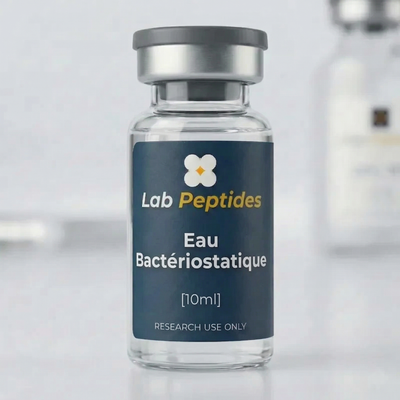
Bacteriostatic water is sterile water to which an antimicrobial agent has been added, most often benzyl alcohol at 0.9 %, to inhibit bacterial and fungal growth once the vial has been opened. It is produced under strict pharmaceutical conditions (filtration, depyrogenation, aseptic packaging under controlled atmosphere) and comes in 10 to 30 mL multi-dose vials, typically in Type I glass sealed with a perforable butyl rubber stopper.
Its primary function is to allow reconstitution and multi-dose use of a lyophilized drug without microbial contamination between withdrawals. Without bacteriostatic, every needle penetration into the vial would introduce colonization risk, especially at room or refrigerated temperature.
Typical composition and pharmaceutical standards
The standard formulation, recognized by the United States Pharmacopeia (USP) and its European equivalent (Ph. Eur.), is:
- Water for Injection (WFI): ultra-pure depyrogenated water, conductivity < 1.1 μS/cm at 25 °C, zero microbial load, endotoxins < 0.25 EU/mL.
- Benzyl alcohol 0.9 %: broad-spectrum bacteriostatic agent (Gram+ bacteria, Gram-, yeasts, some molds), metabolized to benzoic acid then eliminated by the kidney.
- pH: adjusted within 4.5 to 7.0 range for compatibility with most peptides.
- Isotonicity: generally not isotonic (0.9 % benzyl alcohol ≠ isotonic solution). For intravenous preparations, additional dilution in 0.9 % NaCl is recommended.
Major pharmaceutical brands (Hospira/Pfizer, Fresenius, B.Braun) produce bacteriostatic water compliant with USP <1211> and <85> for sterility, chemical purity, and endotoxin profile. In research, batches with a certificate of analysis and explicit expiration date are preferred.
Why benzyl alcohol?
Several bacteriostatic agents could have been chosen (phenol, mercurials, parabens, chlorobutanol), but benzyl alcohol became the standard for several cumulative reasons.
Antimicrobial efficacy at low concentration: 0.9 % is enough to inhibit growth of common contaminants (Staphylococcus aureus, E. coli, Pseudomonas aeruginosa, Candida albicans). Tested according to USP <51> microbiological challenge, it maintains acceptable microbial load over 28 days of multi-dose use.
Physicochemical compatibility with most therapeutic peptides and proteins. At usage concentration, it does not induce precipitation, oxidation, or accelerated deamidation. It is miscible with water and stable over several years in a sealed vial.
Well-characterized toxicological profile in adults: hepatic metabolism to benzoic acid, glycine conjugation to hippuric acid, urinary excretion. Toxicity is very low at doses provided by bacteriostatic water in standard medical use.
Important limitation: benzyl alcohol is contraindicated in neonates (gasping syndrome, linked to accumulation in preterm infants with low metabolic capacity). This is why neonatal preparations use preservative-free water for injection, even though this imposes strict single-dose use.
Bacteriostatic water vs sterile water vs water for injection
Three types of pharmaceutical water coexist and are frequently confused. Key differences:
Water for Injection (WFI): ultra-pure water obtained by distillation or advanced reverse osmosis, sterile, pyrogen-free, without any additive. Used as solvent in the manufacture of injectable drugs and as a diluent in single doses. Short shelf life after opening (immediate use, discard any residue).
Sterile water for irrigation or injection: WFI packaged in sterile vials without preservative, intended for single-dose use. Identical to WFI in composition, it should not be preserved once the vial is opened.
Bacteriostatic water: WFI + benzyl alcohol 0.9 %, packaged for multi-dose use up to 28 days after first opening. It is the standard for reconstitution and spread-out use of a lyophilized peptide.
For a multi-dose research peptide used over several weeks, bacteriostatic water is the obvious choice. For a single-dose reconstitution to be used immediately in a test, sterile water or WFI suffice and avoid adding benzyl alcohol to the biological system. For cell applications sensitive to benzyl alcohol (rare but documented on some lines), preservative-free WFI is preferred.
Laboratory use: good reconstitution practices
Cleanly reconstituting a peptide with bacteriostatic water follows simple but often overlooked rules.
Preparation: remove the peptide vial from the freezer 30 to 60 minutes before reconstitution to allow it to return to room temperature. Briefly centrifuge (10-30 s at 2000 g) to gather powder at the bottom. Disinfect the peptide vial stopper AND that of the bacteriostatic water with a 70 % isopropyl alcohol pad.
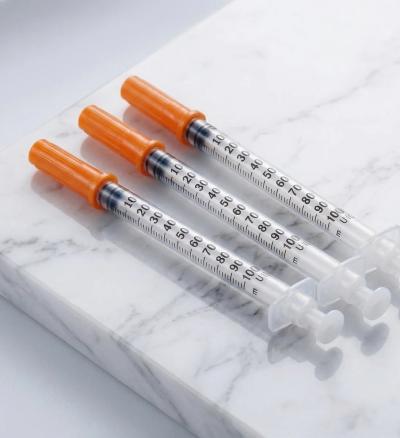
Solvent withdrawal: use a new sterile syringe and a small-gauge needle (27-30 G) to minimize shear forces and peptide aerosolization. Draw the volume needed based on target concentration (for example: 2 mL bacteriostatic water for 10 mg peptide = 5 mg/mL final concentration).
Gentle injection: tilt the peptide vial and let the solvent run slowly down the inner wall, without spraying directly onto the powder. A strong jet creates foam and local denaturation.
Dissolution: do not shake vigorously. Gently swirl the vial between fingers for 1-2 minutes. If dissolution is incomplete, let stand 5-10 minutes then swirl again. For difficult peptides, a brief passage in a gentle ultrasonic bath (30 seconds) at room temperature can help, but never heat above 25-30 °C.
Visual inspection: final solution should be clear, colorless or slightly yellowish depending on the peptide, without visible particles. Any white precipitation, any turbidity, any unexpected color change signals degradation or incomplete dissolution.
Storage and duration of use
An unopened bacteriostatic water vial can be stored at room temperature until the expiration date indicated by the manufacturer (typically 24 to 36 months). Once opened, the USP standard and most manufacturers recommend use within 28 days at room temperature or refrigerator storage, provided:
- Disinfect the septum before each withdrawal;
- Use a new needle for each withdrawal;
- Do not exceed the maximum recommended number of punctures (usually 25 to 30);
- Store upright, stopper up;
- Protect from direct light and thermal shocks.
For reconstituted peptides, stability is not that of bacteriostatic water itself but that of the peptide in solution. Count typically 4 to 8 weeks at +4 °C for a standard peptide, sometimes longer for acylated analogs (semaglutide, tirzepatide) thanks to their superior intrinsic chemical stability.
Contraindications and precautions
Bacteriostatic water is not universal. Several situations require another diluent:
- Neonates and premature infants: gasping syndrome linked to accumulation of unmetabolized benzyl alcohol (strictly contraindicated in medical use).
- Known allergy to benzyl alcohol or other bacteriostatic agents.
- Peptides chemically incompatible with benzyl alcohol (rare, check supplier documentation).
- Some sensitive cellular applications: a few lines or primary cultures show cytotoxicity at final benzyl alcohol concentrations above 0.1 % in culture medium. Typically, the final dilution during an assay dilutes benzyl alcohol to non-toxic concentrations (< 0.01 %), but it is prudent to check against vehicle controls.
For applications strictly in vitro research or on validated animal models, amounts of benzyl alcohol provided are negligible compared to standard dietary intake (beverages, fermented foods).
FAQ: bacteriostatic water in peptide research
Can filtered tap water or mineral water be used to reconstitute a peptide?
No, never. Tap water contains minerals, residual chlorine, trace metal ions, and possibly microorganisms that rapidly degrade a peptide. Bottled mineral water is not sterile and is not pyrogen-free. Only water for injection, sterile water, or bacteriostatic water are suitable.
Can bacteriostatic water be replaced by 0.9 % saline?
For immediate single-dose use without subsequent storage, yes (sterile isotonic 0.9 % NaCl). For multi-dose use over several weeks, no: without bacteriostatic, microbial contamination becomes likely after a few days, especially if the vial is stored at +4 °C or room temperature.
Should bacteriostatic water be refrigerated?
Not mandatory before opening: most manufacturers allow room temperature storage (15-30 °C). After opening, some recommend refrigeration to extend quality, others clean ambient. Follow the manufacturer's leaflet. In any case, respect the 28-day maximum after first puncture.
Where can quality bacteriostatic water be obtained in the United States or Europe?
Hospital pharmacies and some pharmaceutical distributors sell it upon justified request (research laboratories, medical facilities). Several suppliers specialized in laboratory materials also offer USP/Ph. Eur. certified batches for research use. Beware of low-cost products sold online without certificate of analysis: risks of non-compliance (sterility, benzyl alcohol concentration, endotoxins) are real.
Can bacteriostatic water affect biological assay results?
Very rarely at usual dilutions. The 0.9 % benzyl alcohol in bacteriostatic water, diluted 1/100 or 1/1000 in a cellular assay, yields final concentrations without cytotoxic effect on most lines. As a precaution, a vehicle control (same volume of bacteriostatic water without peptide) is good practice for any new assay system.
How many times can a bacteriostatic water vial be punctured?
Standard vials tolerate 25 to 30 punctures with fine needles without septum integrity loss. Beyond that, risk of air leakage and contamination increases. In practice, discard the opened vial after 28 days or as soon as the septum visually shows signs of degradation.
Can expired bacteriostatic water be used?
Not recommended. Beyond expiration date, sterility, benzyl alcohol concentration, and pH may drift from original specification, compromising reconstitution reliability. The modest cost of a new vial does not justify the risk on a research peptide often much more expensive.
Conclusion
Bacteriostatic water is a simple but fundamental pharmaceutical tool for peptide research. Its strengths — sterility, multi-dose stability thanks to 0.9 % benzyl alcohol, compatibility with nearly all peptides — make it the reference diluent for reconstitution. Provided hygiene rules, the 28-day post-opening limit, and known contraindications are respected, it guarantees the reliability of peptide solutions over several weeks. Supply from a recognized pharmaceutical provider, with certificate of analysis, is the best safeguard against non-compliant batches that could silently compromise weeks of experimentation.
Typical reconstitution volumes by research peptide
Peptide / bacteriostatic water ratios depend on the target final concentration. A few common examples for research peptides:
- BPC-157 (5 mg vial): typical reconstitution in 2 mL bacteriostatic water → 2.5 mg/mL. For a more dilute solution easing dose accuracy, 5 mL → 1 mg/mL.
- TB-500 (5 mg or 10 mg vial): 2-3 mL for 5 mg (≈ 1.5-2.5 mg/mL), 4-5 mL for 10 mg (≈ 2 mg/mL).
- GHK-Cu (50 mg vial, cosmetic/skin research): variable volumes depending on topical use or solution, often 5-10 mL for a working solution.
- Semaglutide (2, 5, or 10 mg vial): 1 to 3 mL depending on target concentration. For 5 mg + 2.5 mL bacteriostatic water: 2 mg/mL, practical for μg doses.
- Tirzepatide (5, 10, or 15 mg vial): typically 2-3 mL to obtain a working concentration between 2.5 and 5 mg/mL.
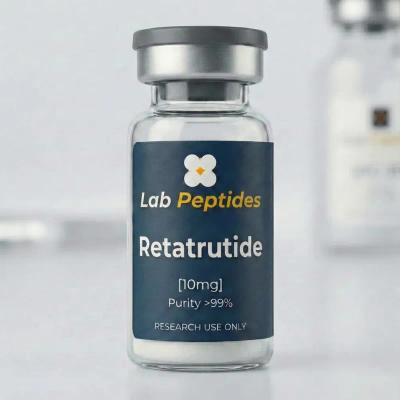
- Retatrutide (5, 10, or 20 mg vial): 2-3 mL depending on research protocol posology.
- GHRH/GHRP (sermorelin, ipamorelin, CJC-1295, 2-5 mg vials): 2 mL → 1-2.5 mg/mL, standard for most pharmacological studies.
The chosen volume varies the final concentration and thus the volume to withdraw for a given dose. A peptide at higher concentration allows smaller withdrawal volumes but makes dose accuracy more sensitive to syringe errors. A reasonable compromise is between 1 and 5 mg/mL for most research uses.
Practical rule: final volume (mL) = total mass (mg) / desired concentration (mg/mL). For 5 mg peptide at 2.5 mg/mL final: add 2 mL bacteriostatic water.
Common problems and solutions (troubleshooting)
Even with quality bacteriostatic water, several situations can arise during reconstitution or prolonged use.
Incomplete dissolution, visible floating particles: multiple possible causes. Let stand an additional 10-15 minutes at room temperature, then gently swirl. If particles persist, a brief passage in a gentle ultrasonic bath (30 s, room temperature) or slight warming to 25 °C max can help. Never heat in a 37 °C or higher water bath. If nothing dissolves the particles, it may be a partially degraded peptide, a batch impurity, or precipitation related to bacteriostatic water pH.
Cloudy or milky solution immediately after reconstitution: protein aggregation. Often linked to a hydrophobic peptide insufficiently soluble in pure aqueous solution. Consider a mixed solvent (10-30 % aqueous acetic acid, diluted DMSO) or a better-quality peptide. Do not use the cloudy solution for quantitative tests.
Color change after several days (yellowing, ambering): ongoing oxidation, most often of methionine or tryptophan. Discard the solution and reconstitute a new aliquot. Consider adding an oxygen scavenger (free methionine, ascorbic acid) or a chelator (trace EDTA) for oxidation-prone peptides.
Activity loss observed in biological assay while the solution appears visually normal: chemical degradation without macroscopic signs (deamidation, partial racemization, low-rate peptide cleavage). Check reconstitution date, freeze-thaw cycles, and consider HPLC requalification if the sample is still usable.
Microbial contamination (odor, late turbidity, granular precipitation): excessively punctured septum, reused needle, non-aseptic working conditions. Discard immediately and restart with a new vial under more rigorous conditions.
Brief history and regulatory evolution
The addition of preservative agents in multi-dose injectable preparations dates back to the 1920s-1930s, when the multiplication of drugs requiring repeated injection (insulin, vaccines, sera) exposed patients to hospital-acquired infections. The first bacteriostatics used were phenol, organic mercurials (thimerosal), and chlorobutanols. Benzyl alcohol gradually emerged from the 1940s-1950s for its safety profile, low-dose efficacy, and moderate cost.
Modern standards USP <51> (Antimicrobial Effectiveness Testing) and Ph. Eur. 5.1.3 (Efficacy of antimicrobial preservation) define quantitative performance criteria: at least 3 log reduction of Staphylococcus aureus, E. coli, and Pseudomonas aeruginosa in 14 days, and no growth of Candida albicans and Aspergillus brasiliensis in 14 days. Commercial bacteriostatic water formulations are validated to these criteria before market release.
More recently, regulatory pressure to limit preservatives in certain vulnerable populations (neonates, pregnant women) has led to development of alternative formulations: single-dose single-use water for injection vials, preservative-free sterile prefilled dose systems, and aseptic BFS (Blow-Fill-Seal) packaging. These alternatives do not replace bacteriostatic water for standard multi-dose research but broaden the available palette.
Alternatives and complements to bacteriostatic water
Depending on specific needs of a research protocol, several alternatives or complements can be relevant.
Single-dose water for injection (WFI): for preparations of immediate use without multi-dose storage, or for biological systems sensitive to benzyl alcohol (some cell lines, delicate primary neuronal cultures). Equivalent cost, but high waste if reconstituting only a few mg of peptide.
Sterile 0.9 % saline solution: for final dilutions before testing or intravenous administration if needed. Advantage of being isotonic, limiting cellular osmotic shocks. Less suited to initial multi-dose reconstitution without bacteriostatic.
Physiological buffers (PBS, HBSS, Ringer): for peptides whose biological activity depends on a specific pH or ionic composition. Often used to dilute a peptide pre-reconstituted in bacteriostatic water to final test concentration.
Acidic buffer solutions for poorly soluble peptides: 10-30 % acetic acid, 0.1 % aqueous TFA, or 1 % formic acid, followed by dilution in target buffer. Useful for hydrophobic peptides or those prone to aggregation.
Low-concentration DMSO: complementary tool to prepare a concentrated stock solution (typically 10 mM in pure DMSO) subsequently diluted to less than 1 % final DMSO in assay buffer. Compatible with most cellular and biochemical tests.
No alternative entirely replaces bacteriostatic water for its primary use case — multi-dose reconstitution of water-soluble peptides — but they extend possibilities depending on each research protocol's specific constraints.