BPC-157 vs TB-500: the 2026 research peptide comparison for tissue regeneration and repair
BPC-157 vs TB-500: two research stars in tissue repair
Two peptides have dominated research on musculotendinous regeneration, intestinal healing and vascular repair for a decade: BPC-157 (Body Protection Compound 15 amino acids, derived from a human gastric protein) and TB-500 (active 17-mer fragment of endogenous Thymosin β-4). Secondary literature often presents them as interchangeable. That is a mistake: they act on distinct biological pathways, target different tissues, and their combination produces a synergy documented by several independent groups.
This 2025 comparison details the mechanisms of action, priority tissue targets, typical research protocols, published preclinical and clinical studies, and above all: why and how the two peptides are frequently stacked rather than used in monotherapy.
Biological origin and structure
BPC-157: 15 amino acids derived from gastric juice
BPC-157 (sequence GEPPPGKPADDAGLV) is a synthetic pentadecapeptide derived from a sequence identified in the human BPC protein, itself extracted from gastric juice. It is remarkably stable in acidic gastric environments (unlike most peptides), which has driven its exploration in both oral and injectable research. Plasma half-life is short (tens of minutes), but tissue effects persist for several hours through a second-messenger cascade.
TB-500: 17-mer fragment of endogenous Thymosin β-4
Thymosin β-4 is a 43 amino acid protein present in virtually every cell of the human body, at particularly high concentrations in platelets and injured tissues. TB-500 corresponds to its central active 17-mer fragment (sequence LKKTETQ), responsible for most pro-regenerative effects. Its half-life is longer than BPC-157, around 2-4 hours, explaining typical 2-3 injections per week protocols rather than daily ones.
Mechanisms of action: two distinct cascades
BPC-157: NO pathway modulation and growth factor expression
Preclinical studies have suggested that BPC-157 acts primarily through three axes:
- NO (nitric oxide) pathway: BPC-157 modulates endothelial NO signaling, favoring local vasodilation and perfusion of injured tissues
- VEGF-R2 expression and angiogenesis: animal models have shown increased formation of new capillaries at the injury site
- Interactions with dopaminergic, serotonergic and GABAergic pathways: BPC-157 exhibits a pleiotropic profile influencing neurological and digestive healing
Documented strengths (animal models): healing of tendons, ligaments, gastrointestinal mucosa, bone, teeth, vessels, cornea. Primary target: soft tissues with strong vascularization.
TB-500: G-actin, cell migration and differentiation
TB-500 operates through a completely different mechanism:
- Monomeric G-actin sequestration: maintains a free actin pool mobilizable for migration of repair cells (stem cells, fibroblasts, endothelial cells)
- Modulation of cell differentiation: publications have suggested effects on myocardial, neural and vascular differentiation
- Anti-fibrotic and anti-inflammatory effects (NF-κB inhibition, cytokine modulation)
Documented strengths: cardiac recovery post-ischemia, cutaneous healing, extracellular matrix remodeling, deep muscle recovery. Primary target: tissues with strong cellular mobilization.
2025 comparison table
| Criterion | BPC-157 | TB-500 |
|---|---|---|
| Origin | Human gastric juice | Thymosin β-4 |
| Length | 15 aa (pentadecapeptide) | 17 aa (active fragment 17-43) |
| Oral stability | High | Low (injection only) |
| Plasma half-life | ~30-45 min | ~2-4 h |
| Primary mechanism | NO pathway + VEGF + growth factors | G-actin sequestration + cell migration |
| Strong tissue target | Tendons, ligaments, GI mucosa | Muscle, myocardium, skin |
| Angiogenesis | Marked | Moderate |
| Anti-fibrotic | Mild | Marked |
| Typical frequency | 1-2x/day (SC local or IP) | 2-3x/week (SC) |
| Human studies | Limited (phase I/II) | Limited (phase II cardio) |
| Documented synergy | Yes, with TB-500 | Yes, with BPC-157 |
Landmark preclinical and clinical studies
BPC-157 side
- Sikiric et al. (2018, Current Pharmaceutical Design): review of over 200 preclinical studies suggesting BPC-157 efficacy on healing of multiple tissues (tendons, ligaments, mucosa, bone, myocardium, central nervous system)
- Huang et al. (2015): pro-regenerative effect on patellar tendon injury models in rats
- Ulcerative colitis models in rats: near-complete restoration of mucosal architecture in 7-14 days
TB-500 side
- Bock-Marquette et al. (2004, Nature): demonstration that Thymosin β-4 promotes cardiomyocyte survival and new vessel formation after myocardial infarction in mice
- Phase II trials on volunteers (Regenerx Biopharmaceuticals): accelerated corneal and cutaneous healing
- Philp et al. (2007): key role in post-ischemic healing and progenitor cell mobilization
BPC-157 + TB-500 synergy: the stack that changes everything
Animal model publications have suggested that BPC-157 + TB-500 co-administration produces tissue repair superior to the sum of the two isolated effects. The mechanistic hypothesis is elegant:
- BPC-157 initiates the early phase: local vasodilation, angiogenesis, growth factor expression, terrain preparation
- TB-500 takes over: mobilizes stem and progenitor cells, directs migration via G-actin, sculpts matrix remodeling
Both peptides operate on complementary temporal scales (BPC early, TB later) and on distinct cellular targets (endothelium and growth factors for one, migratory cells for the other).
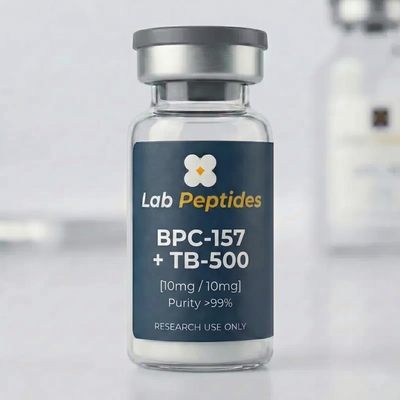
Our BPC-157 + TB-500 10mg + 10mg product combines both actives in a pre-formulated vial to simplify reconstitution — particularly useful for long protocols where both peptides are injected simultaneously.
Choosing between BPC-157, TB-500 or the stack: decision framework
Targeted research on tendons, ligaments, digestive mucosa: BPC-157 monotherapy. Preclinical literature is denser on these specific targets.
Targeted research on deep muscle, myocardium, skin, extensive healing: TB-500 monotherapy. The cell mobilization mechanism takes the advantage on high-cell-density tissues.
Multi-target research or multi-tissue injury: BPC-157 + TB-500 stack. Maximum mechanistic coverage, documented synergy.
Oral administration research: BPC-157 only (gastric-stable). TB-500 degrades in the stomach and requires injection.
Tight budget: BPC-157 alone. TB-500 is generally more expensive at equivalent doses because 17-mer fragment synthesis is technically more delicate.
Typical research protocols
Protocols reported in preclinical literature vary by animal model and target. For in vivo rodent research:
- BPC-157: 10 µg/kg/day subcutaneous or intraperitoneal, 2-4 weeks
- TB-500: 2-3 mg cumulative over 2-3 injections per week, 4-6 weeks
- Stack: same independent doses, separate or combined injections
Clinical human protocols have not yet been standardized — the few phase I/II trials used doses empirically derived from animal models.
Atlas Lab quality: what you can check
Our BPC-157, TB-500 and the BPC+TB combined stack ship lyophilized, in sealed vials, with an HPLC ≥ 98% specification. Available certificates of analysis are published on the BPC-157 and TB-500 10 mg pages.
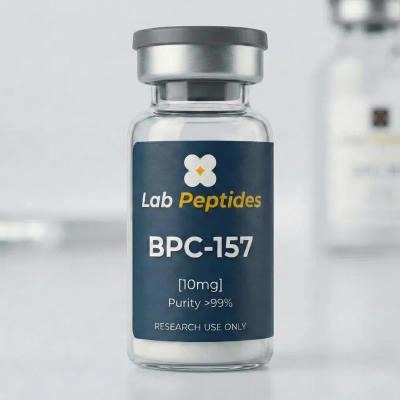
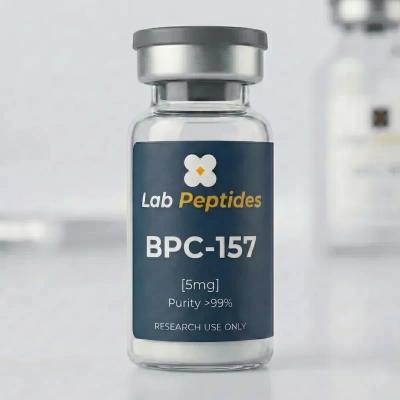
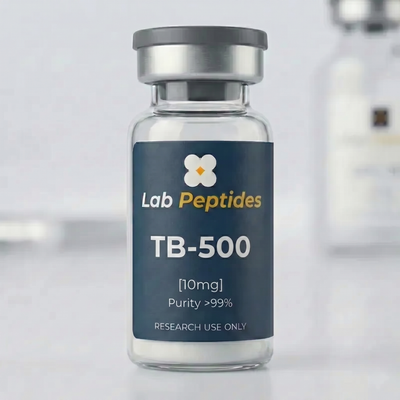
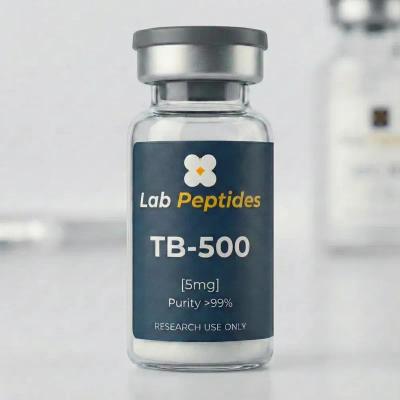
5 mg and 10 mg formats for BPC-157, 5 mg and 10 mg for TB-500, 10 mg + 10 mg pre-mixed combined vial for the stack. Ships the next working day, Monday to Saturday, to France and the EU.
Conclusion: two complementary peptides, not two rivals
The question "BPC-157 vs TB-500" is poorly framed. The two peptides are not in competition: they target different stages and different tissues of the repair process. The right question is: which combination best fits my experimental model? For most multi-tissue research protocols in 2025, the BPC-157 + TB-500 stack constitutes a rational, documented, synergistic starting point.
See our detailed pages on BPC-157 (5 mg and 10 mg), TB-500 (5 mg and 10 mg) and BPC-157 + TB-500 10 mg + 10 mg for reconstitution protocols, referenced studies and certificates of analysis.
All our peptides are intended exclusively for in vitro research or in vivo research on animal models. Not intended for human consumption.