TB-500 and Thymosin β-4: comprehensive guide to tissue regeneration research
Among research peptides most studied on tissue regeneration mechanisms, TB-500 holds a singular position. A synthetic fragment of endogenous thymosin β-4, it concentrates in its 17 amino acids most of the biological activity attributed to the full 43-residue protein. Studies conducted since the 1980s have suggested effects on angiogenesis, cell migration, epidermal wound healing, post-ischemic cardiac repair and inflammatory modulation. This guide details the molecule, its mechanisms, its research applications and analytical requirements to secure experimental protocols — strictly within a Research Use Only (RUO) framework.
Endogenous thymosin β-4: the parent protein
Thymosin β-4 (Tβ4) is a small 43 amino acid protein (mass 4,960 Da) extremely abundant in mammalian cells — it represents about 1 to 5% of total cellular proteins in some lines, making it more concentrated than actin in some contexts. Initially isolated in 1981 by Low and Goldstein from bovine thymus, it belongs to the β-thymosin family (β-4, β-10, β-15) which share an intrinsically disordered solution structure.
Its canonical function is monomeric G-actin sequestration: it binds G-actin with 1:1 stoichiometry via its central domain and prevents spontaneous polymerization into F-actin filaments. This cytoskeleton chaperone role directly regulates polymerization-depolymerization dynamics essential to cellular motility, migration and tissue remodeling. Beyond this intracellular function, Tβ4 is also secreted and exerts paracrine effects on neighboring cells, including angiogenesis stimulation and inflammatory modulation.
Functional mapping of Tβ4 revealed a concentration of biological activity in its central region, more precisely in a 4 amino acid motif (LKKTETQ) sometimes called "active site tetrapeptide" (AcSDKP is another Tβ4-derived tetrapeptide with distinct effects). This discovery guided development of smaller synthetic fragments preserving essential biological activity, paving the way for TB-500.
TB-500: synthetic fragment structure
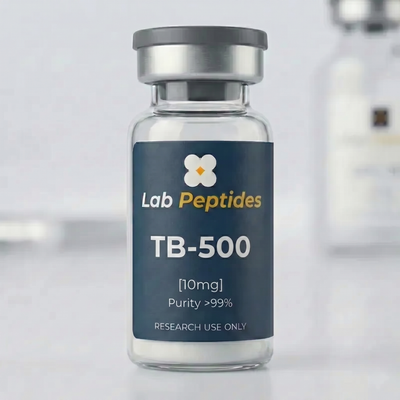
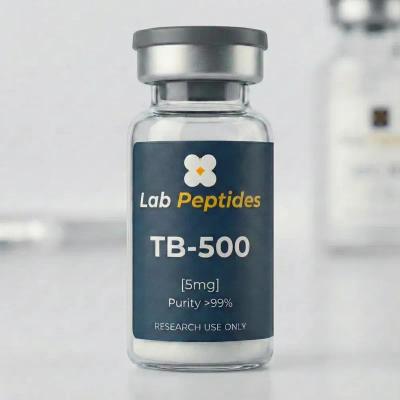
TB-500 (sometimes written TB500 or TB-500) is a synthetic 17 amino acid fragment corresponding to residues 17-23 of native Tβ4, extended by flanking sequences. The commercial designation "TB-500" comes from its historical naming in equine veterinary protocols where it was widely used for tendon recovery. Its exact sequence (LKKTETQEKNPLPSKETIEQEKQAGES varying by supplier) is designed to reproduce the parent protein's actin-regulatory activity while offering more affordable synthesis and increased stability.
TB-500 molecular mass oscillates around 889 Da depending on exact sequence, placing it among intermediate peptides: too large to passively cross cell membranes, but small enough for standard SPPS (solid-phase peptide synthesis) with good yields. Aqueous solubility is good, reconstituted solution stability is 2 to 4 weeks at 4 °C and several months at -20 °C in lyophilized form.
A persistent nomenclature ambiguity exists in the literature: some suppliers commercialize under the "TB-500" label the short active fragment, others the full Tβ4, others yet modified analogs. A detailed COA mentioning exact sequence and MS-confirmed mass is essential to guarantee identity of the received peptide and inter-laboratory reproducibility.
Molecular mechanisms in research
Actin-cytoskeleton dynamics regulation
TB-500's primary action mechanism goes through its ability to sequester intracellular monomeric G-actin. By modulating the G-actin pool available for polymerization, the peptide influences actin filament formation rate, dynamics of cellular protrusions (lamellipodia, filopodia) and directional migration. Studies on endothelial cells, keratinocytes and fibroblasts have shown measurable migration acceleration in in vitro wound healing assays after TB-500 exposure at nanomolar to micromolar concentrations.
Angiogenesis and endothelial cells
Studies have suggested TB-500 stimulates endothelial cell proliferation and migration (notably HUVEC), tubular structure formation in Matrigel matrices and expression of angiogenic markers (VEGF, bFGF). Mechanisms would involve AKT/PI3K and ERK pathway activation, as well as modulation of the HIF-1α pathway in hypoxic conditions. This pro-angiogenic activity is at the heart of research on post-infarction cardiac repair and complex wound healing.
Anti-inflammatory and immunomodulatory effects
TB-500 modulates expression of pro-inflammatory cytokines (TNF-α, IL-6, IL-1β) in some experimental injury or ischemia-reperfusion models, suggesting an indirect anti-inflammatory effect. Studies on corneal inflammation models, experimental arthritis and murine colitis have documented reduced histological inflammation scores and improved wound healing parameters. The exact mechanism remains under investigation but would involve interactions with unidentified membrane receptors and modulation of NF-κB transcription factor phosphorylation.
Post-ischemic cardiac repair
An active research field on Tβ4 and TB-500 concerns myocardial repair. Mouse studies have suggested infarct size reduction, improved ventricular ejection fraction and increased peri-infarct neovascularization after intraperitoneal or intracardiac administration of Tβ4 or TB-500. These results motivated exploratory clinical trials (notably NCT01113788) of human recombinant Tβ4 in myocardial infarction, with mixed but encouraging results on tolerance and some biomarkers.
Classic experimental models
In vitro wound healing (scratch assay)
The standard protocol consists of culturing a confluent fibroblast or keratinocyte monolayer, performing a linear scratch with a pipette tip, then quantifying the groove closure rate by time-lapse imaging with and without TB-500. Typical tested concentrations oscillate between 10 nM and 10 μM. Control groups include vehicle, native Tβ4 (for comparison) and scrambled peptide (sequence negative control).
Matrigel angiogenesis assays
HUVEC endothelial cells are seeded on a Matrigel carpet (reconstituted extracellular matrix); their ability to form three-dimensional tubular structures in 6 to 24 hours is quantified by imaging and calculation of morphometric parameters (node number, total tube length, mesh number). TB-500 at nanomolar concentration typically improves density and complexity of the formed network.
In vivo injury models
Standard mouse models include dorsal skin incisions, punch biopsy lesions, controlled thermal burn models, contusion or incision muscle lesions, and cardiac or cerebral ischemia-reperfusion models. TB-500 administration is generally by intraperitoneal or subcutaneous route, at typical doses of 1 to 10 mg/kg, sometimes in repeated administrations. Evaluation criteria include macroscopic closure rate, histological analysis (collagen remodeling, capillary density), immunohistochemistry of proliferation (Ki67) and apoptosis (TUNEL) markers.
Pharmacokinetics and biodistribution
Published pharmacokinetic data on TB-500 are limited but suggest a short plasma half-life in rodents (30 minutes to 2 hours depending on studies), with wide biodistribution including liver, spleen, kidneys and skeletal muscle. Subcutaneous administration gives acceptable bioavailability with Tmax around 1 to 2 hours. Intravenous route produces a high plasma peak but rapid elimination, motivating chronic protocols by repeated administrations.
Degradation is mainly through plasma and tissue proteolysis, with short metabolites excreted renally. No major active metabolite has been identified to date, suggesting TB-500 pharmacological action resides in the parent molecule. This short kinetics explains the frequent choice of multi-weekly administration protocols (2 to 3 times per week) in animal studies.
TB-500 and BPC-157 synergy: active research axis
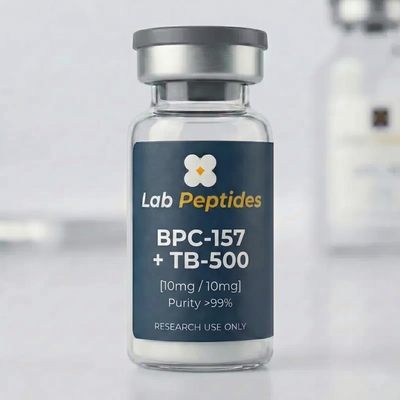
Co-administration of TB-500 and BPC-157 has become an active preclinical research subject since the late 2010s, based on the hypothesis that complementary mechanisms of these two peptides could produce additive or even synergistic effects on tissue regeneration. TB-500 acts preferentially on angiogenesis, cell migration and cytoplasmic remodeling; BPC-157 modulates wound healing via NO pathway, VEGF-R2 activation and stabilization of cellular junctions. In vitro studies and mouse models suggest additive effects on muscle, tendon and intestinal healing speed, without notable toxicity increase.
These data remain exclusively preclinical and interaction mechanisms at the molecular level are not entirely characterized. Typical co-administration protocols use distinct routes (TB-500 subcutaneous, BPC-157 subcutaneous or oral in rodents) at standard individual doses, with combined evaluations on cicatricial criteria. This field illustrates the emergence of a combinatorial peptide pharmacology still largely to be cleared.
Analytical requirements and lot quality
Inter-lot variability is a major issue for TB-500 due to the relative peptide length (17 aa) which increases the risk of truncated sequences or post-synthetic modifications (methionine oxidation, asparagine deamidation). A premium COA documents:
- MS identity: monoisotopic mass ± 2 Da, MS/MS confirmation after tryptic digestion
- Reverse-phase HPLC purity > 98%, individual impurities < 0.5%
- Water content by Karl Fischer < 6%
- Endotoxins by LAL kinetic chromogenic < 1 EU/mg
- Counter-ion content (residual TFA) by ion chromatography
- Orthogonal controls: amino acid analysis after hydrolysis, circular dichroism if sequence has marked secondary structure
Lot stability must be documented for at least 12 months under recommended storage conditions (-20 °C lyophilized, protection from light and moisture). Any storage excursion must be reported to enable evaluation of potential impact on biological activity.
TB-500 research FAQ
What is the real difference between TB-500 and native Tβ4?
TB-500 is a 17 amino acid fragment versus the 43 of full Tβ4. Main biological activity (actin sequestration, angiogenesis) is preserved but some activities of full Tβ4 (interactions with complete protein partners) may be reduced. In research, TB-500 offers a simpler molecule to synthesize and characterize.
Is TB-500 approved for human use?
No. TB-500 is an RUO research peptide. Recombinant Tβ4 was subject to exploratory clinical trials but no marketing authorization exists for TB-500 or Tβ4 in major jurisdictions (FDA, EMA, MHRA).
Why is TB-500 on the WADA list?
Because its pro-angiogenic and regenerative effects led to diversion in equine then human sports. WADA classified it among prohibited metabolic/cell signaling modulating agents for competitive equity protection.
Which administration route to study TB-500 in mouse research?
The subcutaneous route is most frequent for chronic protocols, offering acceptable bioavailability and ease of repeated administration. Intraperitoneal gives higher Cmax. Intravenous is reserved for pharmacokinetic studies.
How to evaluate bioactivity of a received lot?
By scratch assay on fibroblasts (closure rate measurement), Matrigel angiogenesis assay with HUVEC, or cellular proliferation dosing. Activity significantly below reference standard suggests a purity or stability problem of the lot.
Is TB-500 stable once reconstituted?
Relatively. In aqueous solution at 4 °C, stability is 2 to 4 weeks for most applications. Beyond that, freezing at -20 °C in single-use aliquots is recommended for longitudinal studies.
Research perspectives
Recent developments around TB-500 and Tβ4 explore several promising directions. Modified analogs incorporating non-natural amino acids or pegylations aim to increase plasma half-life and tissue specificity. Conjugations with targeting ligands (anti-integrin antibodies, cardiac homing peptides) seek to concentrate regenerative action in injured tissues. Studies on local delivery via hydrogels, collagen matrices or dermal patches seek to bypass pharmacokinetic limitations of systemic injections.
Research on Tβ4 and TB-500 illustrates the emergence of a tissue regeneration pharmacology based on fine modulation of cytoskeleton and angiogenic pathways. This molecule class occupies a distinct niche from classic growth factors (VEGF, PDGF, FGF) by offering an upstream mechanism that facilitates migratory and proliferative competence of target cells. Coming years will likely see identification of new active fragments, non-canonical protein partners and specific signaling pathways, enriching the experimental therapeutic landscape of complex wound healing.
RUO reminder: TB-500 and Tβ4 are research peptides intended exclusively for in vitro use or on ethics-committee-validated animal models. No extra-pharmaceutical human use is authorized or recommended.
AcSDKP: the other peptide derived from thymosin β-4
Research on Tβ4 revealed that beyond the central LKKTETQ fragment exploited by TB-500, another bioactive tetrapeptide is released by enzymatic cleavage: AcSDKP (Ac-Ser-Asp-Lys-Pro), also called goralatide. This peptide presents distinct and complementary properties: inhibition of hematopoietic stem cell proliferation (myeloprotective effect in chemotherapy), modulation of cardiac and renal fibrosis via blocking the TGF-β1 pathway, and anti-inflammatory activity. AcSDKP is physiologically degraded by angiotensin-converting enzyme (ACE), creating an unexpected link between the renin-angiotensin axis and tissue remodeling via Tβ4.
This duality between AcSDKP and the central LKKTETQ fragment illustrates the combinatorial biology of Tβ4: a single parent protein releases multiple bioactive peptides with differentiated functions depending on tissue enzymatic context. In research, comparative study of TB-500 and AcSDKP enables dissection of respective contributions of these two axes to tissue regeneration, and identification of pathologies where each is preferentially involved (myelo-inflammation versus fibrosis versus wound healing).
Tβ4 and stem cells: niche compartment regulation
An emerging aspect of Tβ4 and TB-500 research concerns their role in stem cell mobilization and differentiation. Studies on mesenchymal stem cells (MSC), cardiac stem cells (CSC) and endothelial progenitor cells (EPC) have suggested that Tβ4 modulates recruitment of these populations to injury sites via interactions with chemotactic gradients (notably SDF-1/CXCR4). In myocardial infarction models, administration of Tβ4 or TB-500 increases the density of CD31+ cardiac progenitors in the peri-infarct zone and improves their differentiation into functional endothelial cells.
These observations position Tβ4 as a niche microenvironment regulator rather than a simple direct cellular stimulator. This integrative function brings it conceptually closer to pluripotent growth factors (FGF, PDGF, Wnt) acting on heterogeneous cell populations rather than on a single type. In research, this dimension is evaluated by multi-parameter flow cytometry on dissociated tissues, in vivo tracking by bioluminescence or fluorescence, and single-cell RNA-seq analysis to map induced phenotypic transitions.
TB-500 in equine veterinary research: historical lessons
TB-500 has been historically widely used in equine research for studying tendon and ligament recovery, a field where racehorses and sport horses experience extreme mechanical constraints. Research veterinarians documented encouraging effects on tendon healing (superficial digital flexor tendon), with echography showing faster collagen fiber restructuring and decreased lesion recurrence. These data motivated TB-500 listing as a prohibited substance in equestrian competition by the International Equestrian Federation (FEI) and the International Federation of Horseracing Authorities (IFHA).
Classic equine protocols used doses of 2 to 5 mg per injection, administered subcutaneously or intravenously, in weekly series over 4 to 8 weeks. Observations over a decade of veterinary use established a globally favorable tolerance profile in terms of acute adverse effects, but also highlighted limitations of long-term evaluation in a large animal population difficult to follow longitudinally. This veterinary experience informs current research protocols but does not constitute formal pharmaceutical validation in the sense of ICH standards.
Wound healing biomarkers: beyond macroscopic evaluation
Modern evaluation of TB-500's regenerative action no longer limits itself to macroscopic wound closure measurement. A molecular biomarker panel enables much finer reading of processes at play. Matrix metalloproteinases (MMP-2, MMP-9) are quantified by zymography or ELISA and reflect extracellular matrix remodeling. Angiogenic growth factors (VEGF-A, angiopoietin-1 and 2, PDGF-BB) are dosed by multiplex ELISA in tissues and blood. Inflammation markers (CRP, SAA, IL-6) follow inflammatory resolution. Wound healing miRNAs (miR-21, miR-155, miR-126) bring a complementary epigenetic reading.
This biomarker mapping allows distinguishing a peptide that accelerates wound healing from a peptide that qualitatively modifies the nature of scar tissue (hypertrophic fibrosis versus harmonious remodeling). TB-500 typically presents a favorable profile on this multi-parameter readout, with rapid normalization of inflammatory markers and balanced matrix remodeling, without marked pro-fibrotic signature. This quality differentiates TB-500 from some classic growth factors (TGF-β) that accelerate wound healing at the cost of excessive fibrosis.
Therapeutic perspectives: clinical trials of human Tβ4
Although TB-500 is not approved for human use, recombinant human Tβ4 has been the subject of several exploratory clinical trials. Investigated indications include corneal ulceration (RegeneRx with the RGN-259 candidate), chronic skin ulcers (venous ulcers, diabetic foot ulcers), epidermolysis bullosa and acute myocardial infarction. Cumulative results showed good tolerance and efficacy signals varying by indication, without a clear breakthrough to FDA or EMA approval to date.
These human trials, although not constituting a validation for TB-500 as a distinct molecule, bring valuable learnings on pharmacology, safety and efficacy of the Tβ4 class. They notably illuminate useful therapeutic windows (doses, frequencies, durations), most responsive populations, and indications where the benefit-risk ratio is most favorable. Preclinical research on TB-500 can draw inspiration from this clinical accumulation to refine experimental protocols and select the most relevant models for future translation projects.