GLP-1 and metabolic research: semaglutide, tirzepatide, retatrutide — the 2026 scientific overview
The GLP-1 decade: modern medicine's greatest therapeutic turning point
The history of metabolic medicine is written in two phases. Before 2017, type 2 diabetes and obesity were treated with a mosaic of pharmaceutical tools of modest performance: metformin, sulfonylureas, basal insulins, some first-generation incretins. After 2017, with the arrival of injectable weekly semaglutide, then bi-agonist tirzepatide and finally tri-agonist retatrutide, a new era opened. Weight loss of 15 to 25% in a year, drastic HbA1c reduction, documented cardiovascular benefits, possible reduction of renal and neurological events: GLP-1 analogues shifted the limits of what was thought achievable by a metabolic pharmacological intervention.
This shift is not purely clinical. It rests on deep understanding of the incretin axis, class B GPCR signaling pathways, peptide engineering strategies to extend half-life and diversify action profiles. Preclinical research on GLP-1 analogue peptides has become one of the most active domains of modern pharmacology, with massive industrial investments but also renewed academic interest for fundamental mechanisms of metabolic regulation.
This guide offers a scientific overview of the GLP-1 family for researchers, pharmacology students and private laboratories using these peptides as exploratory research tools. It covers fundamental molecular mechanisms, structural evolution of analogues, typical experimental protocols and research directions open for the coming years. Everything is articulated within a strictly RUO (Research Use Only) perspective: peptides available on lab-peptides-france.com, including semaglutide, tirzepatide and retatrutide in various concentrations, are intended exclusively for laboratory research and must never be used on humans outside authorized clinical trials.
Native GLP-1: origin, biology, limitations
GLP-1 (Glucagon-Like Peptide-1) is a 30-amino acid incretin hormone secreted by intestinal L cells after ingestion of carbohydrates, lipids or proteins. Discovered in the 1980s as an alternative cleavage product of preproglucagon, it occupies a central position in postprandial glycemia regulation. Physiologically, its role is to signal to the organism that nutrients are arriving and to coordinate the adapted endocrine and neurological response: proportioned insulin secretion, glucagon suppression, slowed gastric emptying, induction of central satiety.
This physiological elegance masks a major pharmacological limitation: native GLP-1 has a plasma half-life of only 1 to 2 minutes. It is rapidly degraded by the DPP-4 enzyme (dipeptidyl peptidase-4), which cleaves the first two amino acids (His-Ala) to produce the GLP-1(9-36) metabolite considered inactive on the classical GLP-1R receptor. This ephemeral nature makes direct therapeutic use of the native peptide impossible: continuous infusion would be required to maintain effect, which is incompatible with mass ambulatory medicine.
To circumvent this limitation, two complementary strategies emerged. The first, indirect, consists of pharmacologically inhibiting DPP-4 to extend endogenous GLP-1 half-life. DPP-4 inhibitors (sitagliptin, vildagliptin, saxagliptin) marketed since 2006 exploit this approach, but their effects remain moderate because they only augment naturally secreted GLP-1, typically a few pmol/L. The second, more transformative strategy consists of designing peptide analogues intrinsically resistant to DPP-4 and other circulating proteases, with extended half-life enabling spaced administrations.
GLP-1R receptor: a class B GPCR machinery
The GLP-1 receptor (GLP-1R) belongs to the B family of GPCRs (G-protein coupled receptors), also called "secretin family". Structurally, it presents a large extracellular N-terminal domain of 130 amino acids that binds the C-terminal part of the peptide, and a 7-helix transmembrane domain that interacts with the N-terminal part of the peptide. This "two-domain binding" architecture distinguishes class B GPCRs from class A GPCRs (like adrenergic or opioid receptors) and imposes particular constraints on pharmacological design.
GLP-1R activation by an agonist induces a conformational change that mainly activates Gαs protein, leading to increased intracellular cAMP via adenylate cyclase. The cAMP signal activates PKA and the Epac pathway, which converge on phosphorylation of calcium channels, closure of ATP-dependent potassium channels, and finally exocytosis of insulin granules in pancreatic β cells. In hypothalamic cells, the same cAMP signal modulates neuronal excitability of anorexigenic circuits, explaining the appetite effect.
But GLP-1R is not a simple Gs transducer. It also activates, with variable kinetics and efficacies depending on the ligand, β-arrestin 1, β-arrestin 2, MAPK pathways and intracellular trafficking pathways. This signaling complexity opens the way to the concept of "signaling bias": a ligand can preferentially activate the Gs pathway (beneficial for insulin secretion) at the expense of the β-arrestin pathway (potentially associated with adverse effects such as nausea and vomiting). Design of biased agonists represents one of the most active innovation axes in current GLP-1 pharmacology.
Semaglutide: the peptide engineering breakthrough
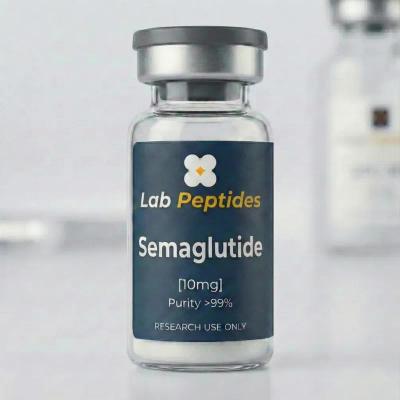
Semaglutide, developed by Novo Nordisk and marketed under Ozempic (diabetes) and Wegovy (obesity) names since 2017-2021, represented the first massive demonstration of what peptide engineering could accomplish on the GLP-1 family. Its structure integrates three key modifications compared to native GLP-1, each with a precise pharmacological objective.
Aib substitution at position 8: alanine at position 8, directly involved in DPP-4 recognition, is replaced by a non-natural amino acid called Aib (α-aminoisobutyric acid). This amino acid presents an additional methyl on the α-carbon, which sterically blocks DPP-4 fixation and catalytic activity. Semaglutide is therefore intrinsically resistant to the cleavage that limits native GLP-1.
Modified fatty acid at position 26: lysine at position 26 is conjugated to a C18 di-acid chain (octadecanedioic acid) via a glutamic spacer and an AEEA spacer (8-amino-3,6-dioxaoctanoic acid). This lipid chain enables reversible non-covalent binding to serum albumin, which circulates with its own half-life of approximately 19 days. Albumin-bound semaglutide is progressively released and binds to the GLP-1R receptor, which stretches its effective half-life to approximately 165 hours (roughly 7 days) in humans.
Arg substitution at position 34: arginine replaces lysine to avoid undesired conjugations with the fatty acid during chemical synthesis, guaranteeing selective acylation only at position 26. This modification also preserves conformational stability of the C-terminal part of the peptide.
Together, these modifications transform an ephemeral peptide into an analogue administrable once weekly, with superior metabolic efficacy to the previous liraglutide (daily administration). In phase III clinical studies, semaglutide demonstrated weight loss exceeding 15% over one year in non-diabetic obese patients, which catalyzed the current enthusiasm for the GLP-1 class.
Tirzepatide: the emergence of GLP-1/GIP bi-agonism
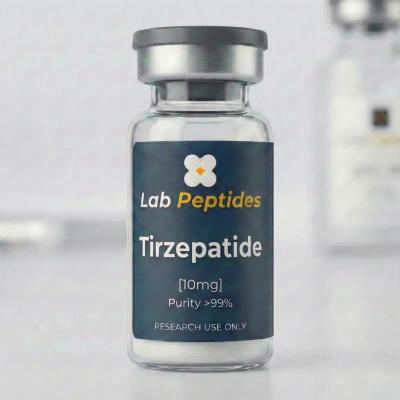
Tirzepatide, developed by Eli Lilly and marketed under Mounjaro (diabetes) and Zepbound (obesity) since 2022-2023, marks a major conceptual evolution: instead of optimizing a pure GLP-1 agonist, it co-agonizes simultaneously GLP-1R and GIP-R receptors. This strategy builds on the old observation that GIP (Glucose-dependent Insulinotropic Polypeptide) is the second major incretin hormone, also secreted by the intestine in response to nutrients, but whose therapeutic potential had long been underestimated.
GIP acts on its GIP-R receptor, primarily expressed in pancreatic β cells (insulin secretion potentiation) and adipose tissue (storage and insulin sensitivity). Adding a GIP-agonist component to a GLP-1-like scaffold produces a metabolic profile distinct from semaglutide: superior weight loss at equivalent concentration (up to 20-25% in clinical trials), more marked improvement of insulin sensitivity, and possibly a different gastrointestinal side effects profile. SURMOUNT and SURPASS trials confirmed these differences.
Structurally, tirzepatide comprises 39 amino acids and integrates chimeric elements from GLP-1, GIP and glucagon. Like semaglutide, it uses an Aib substitution at position 2 to resist DPP-4 and carries a modified fatty acid (C20) for extended albumin binding. Its affinity is close to native GIP on GIP-R but slightly lower than semaglutide on GLP-1R, a carefully calibrated balance to maximize metabolic benefits.
Retatrutide: triple GLP-1/GIP/glucagon agonism
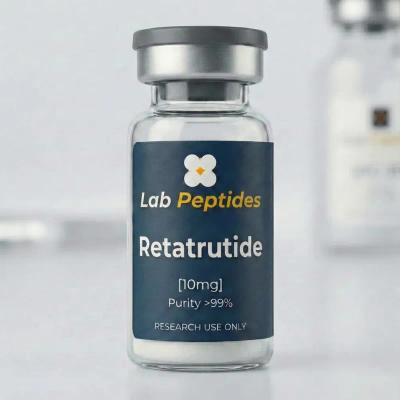
Retatrutide, still in clinical development by Eli Lilly in 2026, pushes the multi-receptor logic to its natural extension: it simultaneously agonizes GLP-1R, GIP-R and the glucagon receptor (GCGR). The inclusion of activity on GCGR, long considered counter-productive in a diabetic context, rests on subtle physiological reasoning.
Glucagon has several metabolic actions beyond hepatic glycemia stimulation. It increases basal energy expenditure, stimulates adipose lipolysis and promotes thermogenesis. Combined with the dominant anti-glycemic effect of GLP-1 and GIP, moderate GCGR activation can amplify weight loss without compromising glycemic control, provided a carefully calibrated activation ratio between the three receptors. Phase II clinical trial data published in 2024-2025 suggested weight loss potentially approaching 24% at one year in obese patients, potentially positioning retatrutide as the most potent GLP-1 analogue ever developed.
Structurally, retatrutide is a 39-amino acid peptide related to tirzepatide but with a modified affinity balance between the three receptors. It retains engineering chemical modifications (Aib, C18-C20 fatty acid) to resist DPP-4 and extend half-life to approximately one week. For research teams, retatrutide opens new mechanistic questions: how are the three receptor signals integrated at the cellular level in different tissues? Are effects additive, synergistic, or do non-predictable pharmacological behaviors emerge from the simple sum of pure agonists?
Six families of GLP-1 analogues in 2026 research
The classification of current research GLP-1 analogues organizes usefully around six structural and functional families, each opening specific experimental questions.
First-generation mono-GLP-1 agonists: exenatide (Byetta), liraglutide (Victoza/Saxenda). Short half-lives (exenatide ~2.4h, liraglutide ~13h), daily or even twice-daily administration. Historical and comparative value: serve as mechanistic reference for signaling bias studies and pharmacodynamic differences.
Second-generation mono-GLP-1 agonists: semaglutide, dulaglutide. Long half-lives (>100h), weekly administration. Represent the current standard of GLP-1 mono-agonism and serve as comparative baseline for all new molecules in development.
GLP-1/GIP bi-agonists: tirzepatide, currently marketed, plus several candidates in preclinical or early clinical phase. Enable experimental study of GLP-1R × GIP-R interactions in different tissues and exploration of metabolic synergy mechanisms.
GLP-1/GIP/Glucagon tri-agonists: retatrutide in phase III, several competing candidates in development. Open the front of triple multi-agonism, with variable affinity calibrations enabling experimental dissection of contributions from each receptor to observed phenotypes.
Biased agonists: molecules designed to preferentially activate the Gαs pathway over β-arrestin on GLP-1R. Active research in years 2023-2026 because these molecules could reduce gastrointestinal side effects while preserving metabolic efficacy. Few clinical candidates available to date, but abundant preclinical literature.
Oral GLP-1 agonists: Rybelsus (oral semaglutide) and several new formulations in development. Technological challenge: enable absorption of a relatively large peptide through intestinal epithelium. Current formulations use permeability adjuvants (SNAC) but bioavailability remains limited (<1%), which restricts applications to well-defined indications.
Typical experimental protocols in preclinical GLP-1 research
Protocol design using GLP-1 analogues in preclinical research follows well-established patterns useful to master to produce robust data comparable to international literature.
In vitro studies on INS-1 or MIN6 cells: pancreatic β cell model lines to evaluate glucose-dependent insulin secretion in response to increasing agonist concentrations. Typical concentrations: 0.1 nM to 100 nM. Measurements: secreted insulin by ELISA, intracellular cAMP by radioimmunological assay or cAMP-bioluminescent assay, intracellular calcium by fura-2 imaging.
In vitro studies on transfected HEK293 cells: human renal epithelial line transfected transiently or stably with human (or murine) GLP-1R, GIP-R or GCGR receptor. Enable measurement of receptor activation independent of physiological context. Measurements: cAMP accumulation, β-arrestin recruitment by BRET, internalization by confocal imaging.
Animal studies in C57BL/6 mice: standard model for metabolic pharmacology studies. Mice made obese by 60% hyperlipidic diet (DIO, Diet-Induced Obesity) for 12 to 16 weeks before treatment. Weekly or daily subcutaneous administration according to analogue pharmacokinetics. Typical doses: 3 to 30 nmol/kg. Primary measurements: body weight, body composition by DEXA, fasting glycemia, HbA1c, glucose tolerance test, fasting insulin.
Animal studies in ZDF diabetic rats: Zucker Diabetic Fatty rats, spontaneous type 2 diabetes model. Used to validate glycemic efficacy and measure HbA1c over 6 to 12 week durations. Complementary to mouse models for specifically diabetic questions rather than obesity.
Biased signaling studies: comparison of a panel of agonists (native peptide, commercial analogues, new candidates) on different markers (Gαs, β-arrestin, internalization, ERK-MAPK). Enable construction of bias profiles (bias plots) and linkage of signaling properties to in vivo efficacy.
Methodological pitfalls specific to GLP-1 studies
Six recurring pitfalls deserve particular vigilance during design and analysis of GLP-1 protocols.
Receptor species differences: murine and human GLP-1R differ by approximately 8% sequence, with significant consequences on affinity and efficacy of certain analogues. Studies on cells transfected with human GLP-1R do not always predict in vivo activity in mice. Use the receptor of the target animal species when fine pharmacological data are required.
Vehicle effect on gastric emptying: the injection solvent (PBS, saline, phosphate buffer with or without additives) can itself influence gastric emptying, a notable effect in feeding behavioral studies. All groups must receive exactly the same vehicle in the same volume by the same route.
Analogue stability in solution: certain GLP-1 analogues can aggregate or degrade in solution during prolonged storage at 4°C, with loss of activity. Verify compound stability in the storage conditions used before starting a long protocol.
Receptor desensitization: repeated administration of a GLP-1 agonist induces progressive GLP-1R desensitization by internalization and transcriptional down-regulation. Chronic administration studies must integrate this kinetics in results interpretation: effect plateau from week 4-6 is physiologically expected.
Native agonist controls: systematically including a native GLP-1 arm (exendin-4 or GLP-1(7-36) amide as reference) enables positioning new analogues relative to the endogenous reference agonist, rather than relative to another commercial analogue.
Precise dosing: typical use concentrations (nanomolar in vitro, nmol/kg in vivo) impose successive dilutions from concentrated stock. Use bacteriostatic water for reconstitution, protein-low-binding tubes to avoid wall adsorption, and always calculate needle dead volumes for precise doses.
Open research directions for 2026-2030
Despite the apparent maturity of GLP-1 pharmacology, numerous scientific questions remain open and orient current preclinical research programs.
Optimized signaling bias: do Gαs-preferential biased agonists really reduce gastrointestinal effects without compromising metabolic efficacy in humans? Preclinical data are encouraging but clinical validation remains to come.
Extra-pancreatic GLP-1R receptors: GLP-1R is expressed in the brain, heart, kidneys and other tissues. What are the respective contributions of these extra-pancreatic compartments to observed clinical effects (cardiac protection, renal event reduction, potential cognitive effects)?
Combinations with other hormones: after GLP-1 + GIP + glucagon, what other metabolic receptors could be integrated? Candidates include amylin (pancreatic anorexigenic peptide), PYY (L-cellular anorexigenic), or more exotic targets like FGF21.
Very long-duration analogues: current development work aims at molecules administrable monthly or even quarterly by controlled-release formulations. These extended pharmacokinetic profiles raise questions about receptor desensitization and long-term efficacy maintenance.
Non-metabolic indications: exploratory studies on GLP-1 application in Alzheimer's disease, Parkinson's disease, addictions (alcohol, cocaine) and non-diabetic cardiovascular diseases generate a preliminary data corpus that could open entirely new indications in the coming years.
GLP-1 research FAQ
Are research-grade GLP-1 peptides identical to commercial versions?
The peptide sequence is theoretically identical (same chemical molecule). Differences lie in formulation (concentration, stabilizers, preservatives), synthesizer origin, quality control rigor and regulatory status. Commercial human versions (Ozempic, Mounjaro, Zepbound) are approved pharmaceutical products with guaranteed sterility, low endotoxins and cGMP compliance. Research versions on lab-peptides-france.com are for laboratory use only, never for human injection; available certificates of analysis are published on the product pages.
How to choose between semaglutide, tirzepatide and retatrutide for a preclinical study?
Depends on the scientific question. To study the pure GLP-1 axis, use semaglutide (selective agonist). To explore GLP-1 × GIP interactions, tirzepatide is appropriate. For triple agonism and glucagon effects, retatrutide opens unique possibilities. Ideally include several molecules in the same study to enable fine pharmacological comparisons.
What precautions for animal pharmacokinetics of long-duration GLP-1s?
The extended half-life (≈7 days in mice) implies that a single subcutaneous dose creates prolonged exposure over several weeks. Washout studies must plan 4 to 6 elimination half-lives, or 28 to 42 days of latency before being able to re-test another compound. Cross-over studies on long-duration GLP-1 are therefore rare and difficult to plan.
Can GLP-1 and BPC-157 be combined in preclinical study?
The two peptides target completely distinct biological axes (metabolic for GLP-1, regenerative for BPC-157). Combination is possible in parallel protocols but without demonstrated interaction mechanism. Avoid hasty synergy interpretations; rigorously control each isolated arm before analyzing the combination.
What are good storage practices for reconstituted GLP-1s?
Lyophilized: -20°C indefinitely (typically 2 to 3 years stability). Reconstituted in bacteriostatic water: 4°C for 4 to 6 weeks, avoid freeze-thaw cycles. For prolonged storage beyond, aliquot in single-use volumes and freeze at -80°C. Avoid prolonged exposure to light, high temperatures (>25°C) and aggressive vortexing that can aggregate the peptide.
French GLP-1 research in 2026
The French scientific community today has a mature ecosystem for GLP-1 research: Inserm units specialized in metabolism, performant phenotypic animal platforms, internationally recognized GPCR signaling expertise. Public and private laboratories can contribute to high-impact questions, from fundamental molecular mechanisms to translational clinical applications. Access to research-quality peptides, with analytical traceability and guaranteed stability, represents a key enabler to produce publishable data in international journals.
On lab-peptides-france.com, the research GLP-1 range comprises semaglutide in 2/3/5/10 mg doses, tirzepatide in 5/10/15/30 mg doses, retatrutide in 5/10/15/20/30/40 mg doses, sermorelin, and several other adjacent metabolic peptides. Five retatrutide dosages were blind-tested by Janoshik (measured purity 99.4 to 99.9%), with reports verifiable online by their key. These resources, combined with rigorous experimental methodology and lucidity on RUO status limits, position French laboratories to actively participate in the coming decade of scientific progress on the GLP-1 family.
Comparative pharmacokinetics of the marketed GLP-1 family
Understanding the pharmacokinetic differences between marketed GLP-1 analogues is essential for researchers designing preclinical studies that will translate meaningfully toward clinical contexts. The following comparative table summarizes key parameters documented in the literature for the main molecules currently available as research-grade peptides.
Exenatide: plasma half-life 2.4 hours, steady-state bioavailability after subcutaneous injection approximately 65-75%, peak plasma concentration reached within 2 hours, twice-daily or weekly extended-release dosing in clinical practice. In research animal models, short half-life requires frequent administration and creates significant pharmacokinetic variability between peaks and troughs.
Liraglutide: plasma half-life 13 hours due to albumin binding via C16 fatty acid palmitoyl modification. Once-daily clinical administration. In rodent research, half-life is substantially shorter (2-4 hours) reflecting species differences in albumin kinetics and peptide clearance. This species difference must be anticipated when extrapolating doses and schedules.
Semaglutide: plasma half-life 165 hours (approximately 7 days) in humans thanks to C18 di-acid fatty acid and Aib substitution. In mice, half-life is shorter but still enables weekly dosing (48-72 hours). Steady-state plasma concentration reached after 4-5 weekly administrations. Clearance occurs primarily through proteolysis into amino acid fragments and biliary excretion.
Dulaglutide: plasma half-life approximately 120 hours, achieved by Fc-fusion rather than fatty acid conjugation. This structural choice produces different distribution properties compared to semaglutide and affects tissue penetration profiles, particularly relevant for neurological and cardiac research applications where peptide access to non-peripheral tissues matters.
Tirzepatide: plasma half-life approximately 115-120 hours in humans, maintained by C20 fatty acid. Weekly administration. In preclinical rodent models, typical effective dosing ranges from 3 to 30 nmol/kg subcutaneously per week, with dose-dependent effects on glycemia and body weight observable from the second week of treatment.
Retatrutide: plasma half-life approximately 144 hours reported in phase II trials, weekly administration. The triple-agonist profile introduces additional pharmacokinetic considerations because effects on glucagon receptor activation could theoretically modify clearance kinetics through hepatic metabolism changes, though current data suggest clearance remains dominated by peptidase degradation similar to other marketed analogues.
Species-specific considerations for rodent pharmacology studies
GLP-1 preclinical studies face systematic species-specific pitfalls that experienced laboratories anticipate from protocol design onward. Ignoring these considerations leads to non-reproducible results and failed translational studies.
Murine GLP-1R sequence divergence: mouse and human GLP-1R share approximately 92% amino acid identity. This 8% divergence is concentrated in extracellular loops critical for peptide recognition and can affect the binding affinity of engineered analogues. Semaglutide retains near-equivalent affinity on murine GLP-1R, but certain newer candidates show differential activity between species, requiring careful selection of the appropriate assay system for each research question.
Plasma albumin composition differences: human and rodent serum albumin share structural homology but differ in fatty-acid binding affinities. Semaglutide's binding to human albumin is approximately 2-fold stronger than to mouse albumin, which partially explains shorter effective half-life in rodents despite similar molecular stability. Studies aiming to compare analogue durations across species should explicitly report species-specific pharmacokinetics rather than extrapolate human clinical parameters.
DPP-4 enzyme distribution: tissue distribution of DPP-4 differs between species, with higher intestinal expression in rodents than in humans. This influences the fraction of subcutaneously administered peptide that reaches systemic circulation intact, particularly for analogues with partial DPP-4 resistance. Studies comparing orally available GLP-1 formulations face particularly pronounced species differences in intestinal metabolism.
Hypothalamic GLP-1R density: murine hypothalamic GLP-1R density has been reported lower than in non-human primates, which may underestimate behavioral effects (feeding, satiety) of analogues in mouse models compared to primate or human responses. Integrating this consideration in translational interpretation prevents systematic underestimation of appetite-modulating effects when moving from mouse data to human trials.
Quality control framework for GLP-1 peptide research batches
Laboratories engaging in serious GLP-1 research increasingly implement structured incoming quality control frameworks for each peptide batch received. A four-tier system has emerged as a practical standard among experienced groups.
Tier 1 — Documentation review: verification of CoA completeness (sequence, molecular weight theoretical versus measured, HPLC purity percentage with chromatogram, mass spectrum with identified peaks, water content, endotoxin level if available). A batch failing any element of tier 1 review is rejected before any laboratory handling.
Tier 2 — Physical inspection: visual verification of vial integrity (seal intact, no moisture intrusion, no discoloration of lyophilisate), label correctness (batch number matching CoA, storage temperature indication, RUO statement visible), packaging adequacy (insulated shipping container, cold chain documentation if applicable for longer-stored batches).
Tier 3 — Identity confirmation: in-house MALDI-TOF or ESI-MS confirmation of molecular mass within 1 Da tolerance, or for laboratories without MS capability, collaboration with institutional core facilities to perform this verification before committing to long animal studies.
Tier 4 — Functional verification: for laboratories engaged in long-term GLP-1 research programs, performing a reference in vitro bioassay (cAMP accumulation on HEK293-GLP-1R cells at a single reference concentration) confirms biological activity before protocol commitment. This tier is the most resource-intensive but catches rare cases of correctly identified but partially degraded peptides whose MS profile remains nominal while bioactivity is compromised.