Semaglutide in research: complete guide to the GLP-1R mechanism, pharmacokinetics and experimental protocols

Why semaglutide dominates GLP-1R research
In less than a decade, semaglutide has become the reference molecule for exploring GLP-1 receptor biology and its metabolic, neuro-endocrine and behavioural ramifications. In both academic research and preclinical models, it now occupies the position held by liraglutide before 2017. Its extended half-life, enzymatic stability and rich corpus of clinical studies make it an unavoidable benchmark compound for anyone investigating GLP-1R pathways in the laboratory.
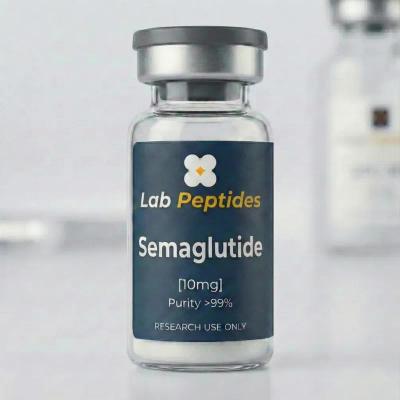
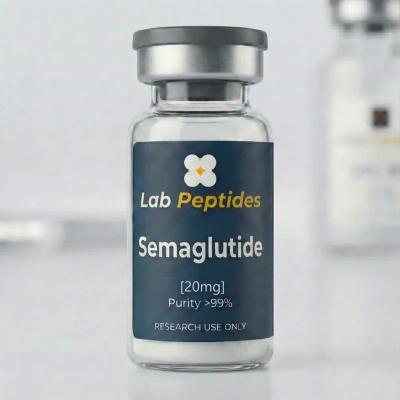
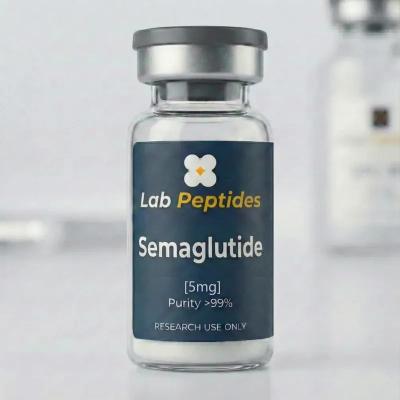
This dossier provides research teams with a structured view: molecular architecture, mechanism of action, pharmacokinetics, experimental models, analytical expectations and handling precautions. Absolute reminder: the peptides sold by Lab Peptides France are strictly intended for in vitro research and laboratory animal experimentation (RUO, Research Use Only). No human use, no therapeutic purpose, no oral or injected administration to human subjects is authorized or covered by our documentation.
Molecular architecture and engineering strategy
Semaglutide is a 31-amino-acid analogue derived from human GLP-1(7-37). Its construction illustrates a now-classical peptide engineering strategy, combining three levers to extend exposure and stabilize the molecule against proteases.
1. Aib substitution at position 8
The alanine at position 8 of native GLP-1 is replaced by α-aminoisobutyric acid (Aib). This non-natural residue protects the adjacent peptide bond against DPP-4 (dipeptidyl-peptidase-4), the main enzyme that degrades circulating GLP-1. Native GLP-1 has a half-life of 1 to 2 minutes; the Aib8 substitution alone extends it beyond 3 hours.
2. Arg34Lys modification + acylation at position 26
An Arg34Lys substitution introduces a unique coupling site. A C18 diacid fatty acid chain (octadecanedioic) is then grafted on lysine 26 via a γ-Glu-2xOEG spacer (glutamic acid + two 8-amino-3,6-dioxaoctanoic units). This lipophilic chain binds non-covalently to serum albumin, which:
- Reduces glomerular filtration (effective complex size above the 60 kDa cutoff)
- Sterically protects endopeptidase cleavage sites
- Creates a slow-release circulating reservoir
3. Structural stability
The combination of these modifications gives semaglutide a terminal half-life of about 165 to 180 hours in humans, roughly 7 days, compatible with a weekly schedule in clinical protocols. In rodents, the half-life is shorter (20-40 hours depending on species), but still several orders of magnitude above native GLP-1.
Mechanism of action at the GLP-1R receptor
The GLP-1R is a class B G-protein-coupled receptor (secretin family). It is expressed in the pancreas (β cells), hypothalamus (ARC, PVN), brainstem (NTS), kidney, heart, intestinal L cells and, according to various studies, in several peripheral tissues. Semaglutide behaves as a full-affinity agonist comparable to native GLP-1 on the Gαs/cAMP pathways, while exhibiting a moderately cAMP vs β-arrestin biased signalling profile.
Canonical cascade
GLP-1R activation by semaglutide triggers: coupling to Gαs, activation of adenylyl cyclase, rise in intracellular cAMP, activation of PKA and Epac2. In the pancreatic β cell, this cascade potentiates glucose-dependent insulin secretion (no direct hypoglycaemic risk). In the hypothalamus, it modulates POMC/AgRP circuits and contributes to the satiety signals studied in research.
Non-canonical pathways
Preclinical studies have documented modulation of the PI3K/Akt pathway, anti-apoptotic effects on the β cell (BCL-2, PDX-1), and anti-inflammatory signalling via NF-κB. These secondary pathways sit at the heart of many current research projects on peripheral effects beyond glucose metabolism (cardiovascular, renal, neuroprotective).
Pharmacokinetics and bioavailability
Subcutaneous route (standard)
In subcutaneous injection in animals, semaglutide follows a depot absorption kinetic (formation of a local lipophilic pool), with a Tmax between 24 and 72 hours depending on species and site. Distribution is centred on the vascular compartment (albumin binding > 99%), with a low apparent volume of distribution (≈ 0.1 L/kg in humans).
Oral route (SNAC formulation)
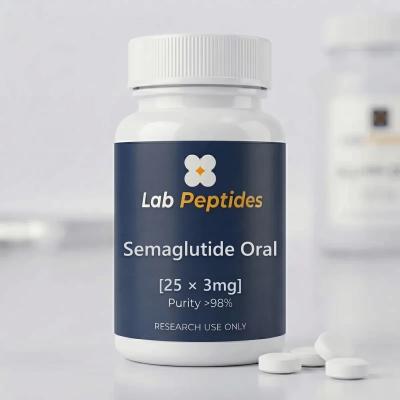
An oral formulation combines semaglutide + SNAC (sodium N-[8-(2-hydroxybenzoyl)amino]caprylate), a gastric permeation agent that transiently increases passive absorption across the epithelium. Bioavailability remains low (≈ 0.4-1%) but sufficient to reach pharmacological concentrations at elevated doses. In research, the subcutaneous route remains dominant for pharmacokinetic reproducibility.
Metabolism and elimination
Semaglutide is metabolised by progressive proteolysis (endothelial cells, hepatocytes) and β-oxidation of the acyl chain. Metabolites are eliminated through urinary and biliary routes. No major CYP450 isoenzyme is involved, which reduces pharmacokinetic interactions in co-treatment. This feature is highly appreciated in research for protocols combining multiple compounds.
Preclinical models and experimental paradigms
Diabetes models
The db/db, ob/ob, ZDF (Zucker Diabetic Fatty) strains form the historical foundation of GLP-1R studies. The parameters classically measured are: fasting glycaemia, OGTT (oral glucose tolerance test), ITT (insulin tolerance test), HbA1c equivalent, insulinaemia, pancreatic insulin content, immunohistochemistry of islets of Langerhans (β mass, β/α ratio).
Diet-Induced Obesity (DIO) models
The DIO (Diet-Induced Obesity) model in C57BL/6J mice under HFD (High-Fat Diet 45-60% lipids) reproduces the phenotypic hallmarks of human metabolic obesity. Semaglutide typically produces reduced food intake, loss of visceral fat, improved insulin sensitivity (HOMA-IR) and a drop in hepatic triglycerides (modelled MASLD/NAFLD).
Neuroscientific models
GLP-1R expression in the NTS (nucleus of the solitary tract), the ARC (arcuate nucleus) and the PVN (paraventricular nucleus) opens paradigms on central appetite regulation, homeostatic/hedonic coupling and dopaminergic interactions (VTA, NAc). Recent studies explore modulation of food reward, alcohol consumption and neuroinflammation in rodent models.
Cardio-renal
Ex vivo studies on isolated hearts (Langendorff) and in vivo (ischaemia-reperfusion, STZ diabetic nephropathy) document anti-apoptotic, anti-fibrotic and anti-inflammatory effects of semaglutide. These preclinical results motivate a research axis distinct from glucose metabolism.
Expected analytical quality control
A semaglutide lot for research use must be accompanied by a complete certificate of analysis (COA) including:
- Identity: high-resolution mass spectrometry (ESI-HRMS). Calculated monoisotopic mass ≈ 4113.6 Da. Observed vs theoretical deviation must be < 2 Da.
- Purity: reverse-phase HPLC (C18 column, acetonitrile/TFA or formate gradient). Target ≥ 98% purity, with documented impurity profile.
- Content: AAA (amino acid analysis) assay or UV-HPLC against reference. Data expressed as peptide net content (%).
- Moisture: Karl Fischer, typically < 6% in lyophilised product.
- Residual acetate: often < 15% (SPPS synthesis leaves an acetate counter-ion that must be quantified to calculate net peptide mass).
- Endotoxins: LAL (Limulus Amebocyte Lysate), essential for any in vivo rodent use. Target < 5 EU/mg according to research standards.
- Sterility / bioburden: depending on the desired level of control.
An incomplete COA (lack of MS identity or HPLC) should be treated as a red flag and lead to rejecting the lot for any publishable work.
Reconstitution, storage, stability
Preparation
Lyophilised semaglutide is classically reconstituted with bacteriostatic water (0.9% benzyl alcohol) or sterile water for injection, depending on the intended duration of use. Volume is adjusted to reach the target concentration, usually 1-5 mg/mL for rodent protocols. Mix by gentle rotation, never by aggressive vortexing, to avoid denaturation and aggregation.
Storage
Lyophilised form: recommended storage at -20°C (long term) or 2-8°C (short term, a few weeks). Reconstituted form: 2-8°C, use within 28 days with bacteriostatic water, 24-48h with water for injection. Avoid repeated freeze/thaw cycles (aggregation, loss of activity).
Analytical stability
Accelerated stability studies (40°C, 75% RH) show loss of HPLC purity through oxidation (possible methionines depending on sequence) and isomerisation. For an archived lot, HPLC/MS recontrol every 12-18 months is recommended in a rigorous laboratory.
Positioning vs other GLP-1R agonists
| Compound | Human half-life | Structure | Typical research use |
|---|---|---|---|
| Native GLP-1(7-37) | 1-2 min | 31 aa, unmodified | Acute in vitro studies |
| Exenatide | 2.4 h | 39 aa, exendin-4 derivative | Short-term diabetes models |
| Liraglutide | 13 h | Palmitoyl-γ-Glu on Lys26 | DIO, cardio-renal |
| Semaglutide | ~7 days | C18 diacid + Aib8 | Chronic protocols, obesity, neuro |
| Tirzepatide | ~5 days | GLP-1R/GIPR co-agonist | Metabolism, incretin synergies |
| Retatrutide | ~6 days | GLP-1R/GIPR/GCGR tri-agonist | Severe preclinical obesity |
Semaglutide offers an excellent compromise between duration of action, commercial availability for research use, and abundance of comparative literature, making it the preferred entry point into GLP-1R programmes.
Semaglutide research FAQ
What is the difference between research-grade and clinical semaglutide?
Chemically, the sequence is identical. The difference lies in intended use (RUO vs pharmaceutical), level of documentation, quality controls (GMP vs non-GMP) and regulatory framework. A peptide sold RUO must never be administered to humans, regardless of its apparent purity.
Why is the C18 chain crucial?
It transforms a short peptide into a circulating albumin depot. Without this chain, the molecule would revert to a half-life of a few hours, incompatible with weekly protocols. This is the engineering trick that defines the "extended half-life GLP-1R" family.
What essential controls on a COA?
Three imperatives: MS identity (confirmed mass), HPLC purity ≥ 98%, and net content assay. In addition for in vivo use: LAL endotoxins, Karl Fischer moisture, residual acetate.
Can I use semaglutide in cell culture?
Yes, in the classical GLP-1R study paradigms: INS-1E, MIN6 cells, GLP-1R-transfected HEK293, pancreatic organoids. Usual concentrations: 1 nM to 1 µM. The solvent (DMSO, water, PBS) must be chosen based on the analytical stability documented for your formulation.
What traceability for peer-reviewed publication?
Journals require: lot number, supplier, COA attached as supporting info, reconstitution method, storage conditions, effective dosages. A serious supplier archives these data and can reissue them several years after delivery.
Research perspectives
Beyond diabetes and obesity, semaglutide has become a transversal pharmacological tool for probing GLP-1R in unexpected contexts: neurodegenerative diseases (Alzheimer, Parkinson models, alpha-synuclein), addictions (alcohol, nicotine, psychostimulants in animal models), MASH (ex-NASH), cardioprotection, nephroprotection. Each new preclinical study expands the map of GLP-1R effects, making technical mastery of the molecule indispensable for teams wishing to remain at the frontier of the literature.
Conclusion
Semaglutide is today the reference tool for probing GLP-1R biology. Its structure, the result of accomplished peptide engineering (Aib8, Arg34Lys, C18 diacid via γ-Glu-2xOEG), ensures metabolic stability and an unrivalled half-life among GLP-1 analogues. In research, good practices focus on analytical rigour (complete COA), reconstitution reproducibility, judicious model choice (rodent vs cell culture) and exhaustive documentation for publication. RUO reminder: no human use, no therapeutic intent, no promise of clinical outcome. Semaglutide is a research compound — and must remain so in all scientific communication.
History of the incretin class and trajectory of semaglutide
The concept of incretin dates back to the 1960s with the observation that orally ingested glucose stimulates insulin secretion more strongly than an equivalent intravenous glucose infusion. The two hormones responsible for this "incretin effect" were progressively identified: GIP (glucose-dependent insulinotropic polypeptide) and GLP-1 (glucagon-like peptide-1). GLP-1 was isolated in 1983 by Bell et al. from the preproglucagon gene.
The 1990s saw an explosion of analogue research: exenatide (derived from exendin-4, Gila monster lizard, 2005), liraglutide (Novo Nordisk, 2010). Semaglutide arrived in 2017 as a weekly injectable and in 2019 as an oral form. Each iteration brought an improvement in the therapeutic index in research: duration of action, digestive tolerance, logistical convenience. This industrial trajectory directly interests researchers who analyse the reverse-engineering loops that made it possible to move from a minute-scale peptide to a weekly compound.
The 2021 publication of the STEP trial (Semaglutide Treatment Effect in People with obesity) also marked a turning point in the preclinical literature: animal studies now seek to characterise secondary targets (central GLP-1R axis, cardiomyocyte, proximal renal tubule) and to mechanistically explain effects observed in humans. For a research team setting up a semaglutide programme, this historical depth is an asset: every variable (dose, duration, animal strain) has been documented in the literature for more than a decade.
Crystallographic structure of the GLP-1R / semaglutide complex
The cryo-electron microscopy studies published from 2017 onward have revealed the three-dimensional architecture of the GLP-1R complex bound to the agonist peptide. GLP-1R adopts the classical topology of class B receptors: seven transmembrane helices, a large N-terminal ectodomain (ECD) that serves as an anchoring pocket for the C-terminal part of the peptide, and an ICL3 loop that interacts with Gαs.
For semaglutide, binding involves:
- A C-terminal anchoring of the peptide in the ECD (peptide residues His7 to Gly10 interact with TMD, residues Ala25-Gly37 with ECD)
- An interaction favoured by the C18 chain via a repositioning of TM1-TM7
- An allosteric activation of the Gαs pocket involving Arg176 (DRY-like), His180 and Tyr237
The "two-domain binding" model (ECD + TMD) explains why central chemical modifications (Aib8, Arg34Lys) do not abolish affinity: they preserve essential contacts while strengthening enzymatic stability. For a laboratory considering SAR (structure-activity relationship) studies or the synthesis of new analogues, this structural knowledge is indispensable.
Dosing protocols in rodents for preclinical research
Animal model publications document a wide range of doses depending on the experimental paradigm and strain. The plages frequently reported in the literature are:
- DIO C57BL/6J mouse: 10-100 nmol/kg SC, 2 to 5 times per week depending on study duration (often 4-8 weeks)
- Sprague-Dawley / Zucker Fatty rat: 5-40 nmol/kg SC, 1-3 times per week
- Cynomolgus / non-human primate (rare in academic context): 0.1-1 mg/kg SC weekly
Dosing reproducibility requires UV-Vis or HPLC calibration of the reconstituted solution before starting the protocol. A measured dosage that differs from the nominal COA value by > 10% must be documented in the lab notebook. Robust studies also include plasma dosing at study end (commercial semaglutide ELISA or LC-MS/MS) to confirm effective exposure.
Kinetic studies document a steady-state accumulation after approximately 4-5 half-lives. In weekly injection in humans (half-life ≈ 7 days), plateau is reached around 4-5 weeks. In mice (half-life ≈ 24 h), plateau is reached in 5-6 days. These temporal scale differences must be taken into account when comparing across species.
Peripheral and central biomarkers to monitor
A well-designed protocol is not limited to body weight and glycaemia. The following variables considerably enrich mechanistic interpretation:
Glucose metabolism
Fasting glycaemia, insulinaemia (ELISA), C-peptide, HOMA-IR, QUICKI, OGTT area under the curve, hepatic insulin sensitivity (hyperinsulinaemic euglycaemic clamp in rodents). Total GLP-1 and active GLP-1 (7-36) dosing by discriminating ELISA.
Lipid metabolism
Triglycerides, total cholesterol, HDL, LDL, circulating FFA (free fatty acids), hepatic triglycerides (Folch extraction), histological steatosis (NAS NAFLD Activity Score), hepatic inflammation (F4/80, TNFα, IL-6).
Body composition
Fat mass vs lean mass by EchoMRI or DEXA, energy expenditure by indirect calorimetry (CLAMS/TSE metabolic cage), locomotor activity by actimetry.
Neuro-endocrine
Leptin, ghrelin, amylin, PYY, GIP. In vigilant animals, food intake measurement by meal-pattern analysis paradigm (number of meals, size, duration, inter-meal interval) reveals whether the anorexigenic effect is mediated by satiety (meal size ↓) or satiation (meal number ↓).
Hypothalamic transcriptomics
POMC, AgRP, NPY, CART expression in ARC by qPCR or in situ hybridisation. c-Fos activation in ARC, PVN, NTS after acute injection to map activated circuits.
Pharmacokinetic interactions and experimental combinations
The absence of CYP450 involvement makes semaglutide relatively neutral toward classical enzymatic inducers/inhibitors. This makes it a combinatorial tool of choice for protocols testing synergy with:
- GIPR agonists (deconstructed tirzepatide, or dedicated GIPR molecules) to explore additive incretin effects
- FGF21 modulators to study hepatic metabolic synergy
- SGLT2 inhibitors (empagliflozin, dapagliflozin) to model cardio-renal combinations observed clinically
- MC4R antagonists to dissect the role of the melanocortin circuit in the central anorexigenic effect
- Exogenous leptin (in ob/ob) to map leptin-GLP-1 crosstalk in appetite control
Synergy studies must plan a 2x2 factorial design (vehicle, compound A alone, compound B alone, combination) to allow statistical interaction analysis. Use of an isobologram is recommended if doses need calibration. Each compound must be characterised analytically before mixing to avoid artefacts linked to an out-of-spec lot.
Limitations, controversies and emerging signals in research
C-cell thyroid
Preclinical studies in rats have historically shown hyperplasia of C cells (calcitonin-secreting) under GLP-1R agonists, with a CMT (medullary thyroid carcinoma) signal observed in certain strains. This signal is not reproduced in primates nor systematically in mice. Long-term rodent studies must include standardised thyroid histopathology with calcitonin assay.
Pancreatitis and pancreatic neoplasia
Acute pancreatitis signals have been reported without causality being definitively established. Demanding preclinical protocols include amylase, lipase, full pancreatic histology.
Muscle mass and sarcopenia
Weight loss under GLP-1R agonists includes a fraction of lean mass (20-40% depending on studies). This observation motivates combined programmes with targeted muscle anabolics (activin/myostatin) in preclinical research. Body composition must be measured, not inferred solely from total weight.
Non-metabolic central effects
Emerging signals on addiction, mood, cognition open a complete field of research. Classical behavioural paradigms (forced swim, open field, Morris water maze, conditioned place preference) can be integrated into semaglutide protocols to document these dimensions.
Gastroparesis
Slowed gastric emptying, measurable in rodents by scintigraphy or 13C-octanoate breath test, is an essential mechanistic biomarker to document in metabolic protocols. It can affect the pharmacokinetics of orally administered co-treatments.
Logistical and documentary best practices
Beyond the science, a semaglutide research project requires rigorous documentary hygiene to ensure reproducibility and publication:
- Lot traceability: lot number, archived COA, reception date, vial opening date, documented storage temperature (USB logger recommended)
- Lab notebook: dated reconstitution, volume, diluent, final concentration, pH measured if possible, mg ↔ nmol conversion calculation (MW 4113.6 Da)
- Consumption: vial volume consumption tracking, expiry after opening, coherence with the protocol
- Aliquoting: to avoid freeze/thaw cycles, make single-use aliquots (20-50 µL) frozen at -80°C in low-binding polypropylene cryotubes
- Final control: at study end, HPLC recontrol of residual lot to detect any degradation during the experiment duration
These practices ensure that a reviewer can reconstruct the analytical chain without ambiguity and that results remain scientifically defensible in the long term.