Retatrutide vs Tirzepatide vs Semaglutide: The Scientific Showdown of GLP-1 Agonists (2026)

The agonist showdown: three molecules, three generations
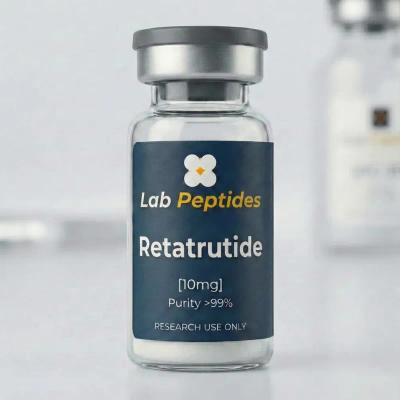
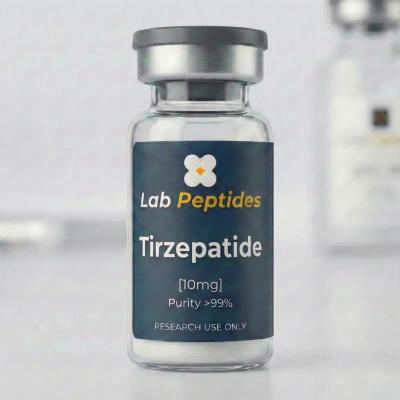
In less than a decade, metabolic research has shifted. Semaglutide (Novo Nordisk, FDA 2017) set the GLP-1 mono-agonist standard. Tirzepatide (Eli Lilly, 2022) redrew the map with dual GLP-1/GIP mechanism. And retatrutide (Eli Lilly, phase III ongoing) aims higher still: triple GLP-1 + GIP + glucagon activity, redefining the upper ceiling of metabolic efficacy.
For research labs, choosing between these three means arbitrating clinical dossier depth, effect intensity, and receptor profile granularity. This head-to-head settles it, data in hand.
Summary comparison table
| Criterion | Semaglutide | Tirzepatide | Retatrutide |
|---|---|---|---|
| Mechanism | GLP-1 mono-agonist | GLP-1 / GIP dual | GLP-1 / GIP / GCGR triple |
| Developer | Novo Nordisk | Eli Lilly | Eli Lilly |
| Brand names | Ozempic, Wegovy, Rybelsus | Mounjaro, Zepbound | — (phase III) |
| Internal code | NNC0113-0217 | LY3298176 | LY3437943 |
| First pivotal trial | SUSTAIN-6 (2016) | SURPASS-2 (2021) | TRIUMPH-1 (2023) |
| Weight loss (48 wk, max dose) | −14.9% (STEP-1) | −20.9% (SURMOUNT-1) | −24.2% (TRIUMPH-1) |
| Proven cardio protection | Yes (SELECT 2023) | Under evaluation | Not yet assessed |
| Route | SC weekly or PO daily | SC weekly | SC weekly |
| Half-life | ~165 h (7 days) | ~116 h (5 days) | ~6 days |
Quick read: semaglutide remains the validated pillar with cardiovascular backing, tirzepatide dominates weight efficacy on solid data, and retatrutide pushes the frontier further — at the cost of a dossier still consolidating.
1. Mechanisms of action: mono, dual, triple
Semaglutide: the pure GLP-1
Semaglutide is a synthetic analog of human GLP-1 modified to resist DPP-4 and bind albumin through a C18 fatty-acid chain. This binding extends half-life to 7 days, enabling weekly injection. The agonist exclusively activates GLP-1R, driving glucose-dependent insulin secretion, delayed gastric emptying, and central satiety signaling (hypothalamic arcuate nucleus).
Tirzepatide: the GIP potentiation effect
Tirzepatide is a 39-amino-acid peptide biased toward GIP (5× higher affinity for GIPR than GLP-1R). This asymmetry is strategic: GIPR activation in brown adipose tissue promotes thermogenesis and energy expenditure, while the GLP-1 arm handles satiety and glycemic control. Documented outcome: 4–6 percentage points additional weight loss vs semaglutide at max dose.
Retatrutide: glucagon as metabolic accelerator
Retatrutide adds a third string: GCGR (glucagon) receptor agonism. Counterintuitive at first glance — glucagon raises glucose — but its hepatic effect (lipolysis stimulation, lipid catabolism boost, steatosis reduction) outweighs the hyperglycemic signal when paired with a strong GLP-1 arm. The TRIUMPH-1 trial (Jastreboff et al., NEJM 2023) documented −24.2% weight loss at 48 weeks at the 12 mg dose — unprecedented for an incretin mimetic.
2. Pivotal trials: what the NEJM data show
Semaglutide — STEP-1 (2021) and SELECT (2023)
STEP-1 (Wilding et al., NEJM 2021) randomized 1,961 adults over 68 weeks on semaglutide 2.4 mg/week. Key outcomes:
- Mean weight loss: −14.9% (vs −2.4% placebo)
- 86.4% of participants achieved ≥5% loss (vs 31.5% placebo)
- 50.5% achieved ≥15% loss (vs 4.9% placebo)
SELECT (Lincoff et al., NEJM 2023) added the cardiovascular signature: in 17,604 non-diabetic adults with prior CV history, semaglutide 2.4 mg reduced MACE (CV death, MI, stroke) by −20% over 3 years.
Tirzepatide — SURMOUNT-1 (2022) and SURPASS-2 (2021)
SURMOUNT-1 (Jastreboff et al., NEJM 2022): 2,539 non-diabetic adults with BMI ≥30, 72 weeks of tirzepatide 15 mg/week:
- Weight loss: −20.9% (vs −3.1% placebo)
- 91% of participants ≥5% loss, 56.7% ≥20%
SURPASS-2 (Frías et al., NEJM 2021): 1,879 T2D patients head-to-head vs semaglutide 1 mg:
- HbA1c: −2.30% (tirzepatide 15 mg) vs −1.86% (semaglutide)
- Weight loss: −11.2 kg vs −5.7 kg
Tirzepatide statistically outperforms semaglutide on both HbA1c and weight in a head-to-head trial — a rare outcome in incretin pharmacology.
Retatrutide — TRIUMPH-1 (2023) and TRIUMPH-2 (2024)
TRIUMPH-1 (Jastreboff et al., NEJM 2023): 338 non-diabetic adults with obesity, 48 weeks at escalating doses:
- 12 mg dose: −24.2% weight loss
- 8 mg dose: −22.8%
- 4 mg dose: −17.5%
- Placebo: −2.1%
TRIUMPH-2 (Rosenstock et al., Lancet 2024) confirmed effects in T2D patients with concurrent NAFLD improvement (hepatic fat reduction −54% at 24 weeks, 12 mg dose).
3. Comparative pharmacokinetics
| Parameter | Semaglutide | Tirzepatide | Retatrutide |
|---|---|---|---|
| Half-life | 165 h | 116 h | ~144 h |
| Tmax | 24–48 h | 24 h | 24–48 h |
| Steady state | 4–5 weeks | 4 weeks | 4 weeks |
| Titration start | 0.25 → 2.4 mg | 2.5 → 15 mg | 2 → 12 mg |
All three molecules share a 4- to 8-step titration protocol to limit GI effects (nausea, early satiety). On reconstitution stability, all three tolerate bacteriostatic water and hold 28 days at 2–8°C once reconstituted.
4. Which molecule for which research axis?
Semaglutide — the validated reference
Preferred for protocols needing a robust benchmark, historical comparison, or cross-validation against published data. Its 10,000+ peer-reviewed publications make it the reference molecule for any methodological comparison.
Tirzepatide — the optimal dual
Preferred for studies of GIP axis in synergy, brown adipose tissue metabolism, or adaptive thermogenesis. Its GIPR-biased mechanism offers unique dissociation of incretin pathways, useful for dissecting individual receptor contributions.
Retatrutide — the metabolic frontier
Preferred for research on hepatic steatosis (NAFLD/NASH), severe obesity (BMI ≥40), or cumulative mono-agonist resistance models. Its triple agonism opens an unprecedented axis on hepatic metabolism and lipid turnover that neither semaglutide nor tirzepatide cover.
5. Tolerability profile — comparative data
All three molecules share a typical GI adverse event profile, decreasing with progressive titration. In phase III:
- Semaglutide 2.4 mg (STEP-1): nausea 44.2%, diarrhea 31.5%, vomiting 24.8%
- Tirzepatide 15 mg (SURMOUNT-1): nausea 29.2%, diarrhea 23.0%, constipation 16.8%
- Retatrutide 12 mg (TRIUMPH-1): nausea 37.2%, vomiting 22.0%, diarrhea 27.1%
Key observation: tirzepatide shows the most favorable GI profile at equivalent dose, likely tied to the GIP component dampening GLP-1-mediated nausea signaling at the brainstem level.
6. Decision synthesis
| Research axis | Recommended molecule |
|---|---|
| Validated cardio benchmark | Semaglutide (SELECT) |
| Mono- vs dual-agonist comparison | Semaglutide + Tirzepatide |
| Isolated GIP study / thermogenesis | Tirzepatide |
| Severe obesity / resistant models | Retatrutide |
| NAFLD / NASH / hepatic fat | Retatrutide |
| Peer-reviewed replication (volume) | Semaglutide |
| Maximum efficacy frontier | Retatrutide |
Conclusion
Semaglutide remains the validated gold standard, tirzepatide represents the current-generation optimum for modern metabolic research, and retatrutide defines the upper frontier of incretin efficacy. None of these molecules is universally "better": the answer depends strictly on the research axis and the scientific question posed.
All three are available at HPLC ≥99% quality for research use. Browse the full catalog below to launch your next protocol on the molecule that frames your question.
FAQ
1. Which molecule offers maximum documented weight loss? Retatrutide at the 12 mg dose with −24.2% over 48 weeks (TRIUMPH-1, NEJM 2023), followed by tirzepatide at 15 mg with −20.9% over 72 weeks (SURMOUNT-1), then semaglutide at 2.4 mg with −14.9% over 68 weeks (STEP-1).
2. Is tirzepatide truly superior to semaglutide? In the head-to-head SURPASS-2 trial (NEJM 2021), tirzepatide 15 mg beat semaglutide 1 mg on HbA1c (−2.30% vs −1.86%) and weight loss (−11.2 kg vs −5.7 kg). Statistical superiority on both endpoints, p < 0.001.
3. Why add glucagon agonism in retatrutide? Glucagon stimulates hepatic lipolysis and β-oxidation. Paired with a strong GLP-1 agonism that counters its hyperglycemic effect via insulin secretion, the glucagon arm becomes an accelerator of energy expenditure and lipid catabolism — particularly relevant for hepatic steatosis.
4. Which molecule has the best GI tolerability? Tirzepatide shows the lowest nausea and diarrhea rates at equivalent dose, likely due to the GIP-mediated attenuation of central emetic signaling.
5. Can all three be reconstituted with bacteriostatic water? Yes, all three are stable after reconstitution with bacteriostatic water (0.9% benzyl alcohol) and hold 28 days at 2–8°C.
6. Is retatrutide available for research in France? Yes, at HPLC ≥99% quality, 5/10/15/20/30/40 mg doses, with per-lot COA. Strict RUO (research use only) compliance.
7. Can all three be compared within a single protocol? Yes, and it's even recommended for translational research. All three share the same reconstitution format, SC route, and weekly-compatible kinetics for a head-to-head comparative.
8. What's the current regulatory status? Semaglutide: FDA 2017, EMA 2018. Tirzepatide: FDA 2022, EMA 2022. Retatrutide: phase III ongoing (expected completion 2026). None of these are approved for human use in France — research use only.